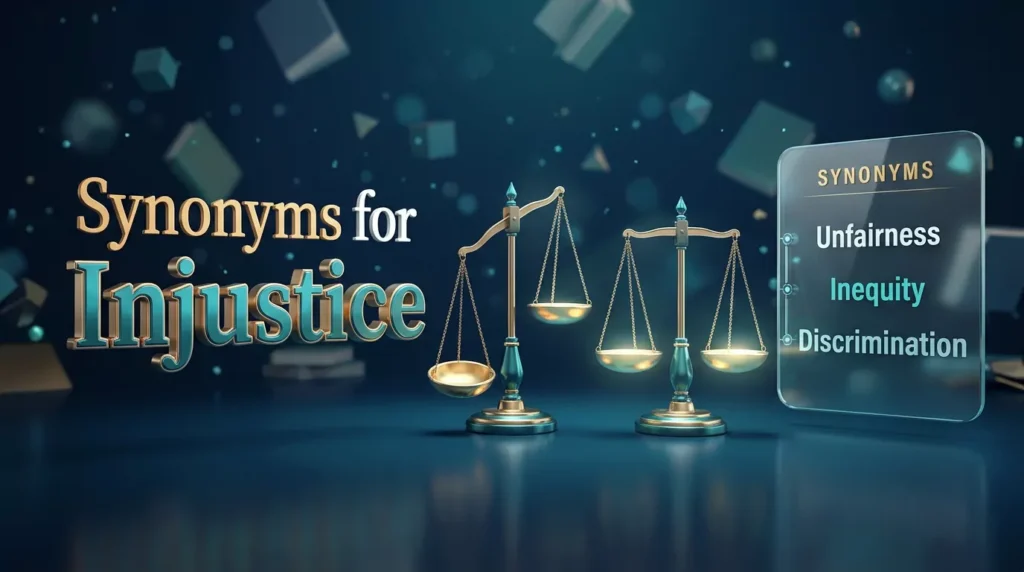

Synonyms for injustice include unfairness, inequity, inequality, discrimination, oppression, and wrongdoing. These words describe unfair treatment, denied rights, or actions that violate moral or legal standards. However, each word carries a slightly different meaning.
Choosing the right alternative depends on your intended message. Some words describe unequal treatment, while others emphasize abuse of power or failures of justice. This guide explains 65 alternatives with meanings, examples, and practical usage tips.
What Does Injustice Mean?
Injustice means a lack of fairness, justice, or proper treatment. It occurs when people face unfair decisions, unequal opportunities, wrongful punishment, or violations of their rights.
For example, denying someone a fair hearing can represent an injustice. Treating qualified applicants differently because of prejudice can also create injustice.
The word applies to personal experiences, legal decisions, workplaces, and wider social systems. Its closest alternatives often include unfairness and inequity. More specific terms describe the particular cause or form of injustice.
Common Synonyms for Injustice
These common alternatives work in everyday conversations, essays, articles, and professional writing. Some are close synonyms, while others describe specific forms of unfairness.
Words for Unfairness and Inequality
- Unfairness: A lack of fair or equal treatment. Example: The unfairness of the decision disappointed everyone.
- Inequity: An unfair difference in treatment, opportunities, or outcomes. Example: The report highlighted inequity in access to education.
- Inequality: A difference in status, resources, rights, or opportunities. Example: Economic inequality can limit access to essential services.
- Wrong: An action or situation that violates moral or legal standards. Example: She spoke publicly about the wrong committed against her family.
- Wrongdoing: An action that is dishonest, unethical, or unlawful. Example: The investigation uncovered serious wrongdoing within the organization.
- Unfair treatment: Behavior that treats someone unjustly. Example: Employees complained about unfair treatment during promotions.
- Partiality: Favoring one person or side over another. Example: The judge was expected to act without partiality.
- Favoritism: Giving unfair advantages to preferred people. Example: Favoritism influenced decisions about workplace opportunities.
- Bias: A preference or prejudice that affects judgment. Example: The committee reviewed its process to reduce bias.
- Prejudice: An unfair opinion formed without sufficient knowledge or evidence. Example: Prejudice prevented him from considering her qualifications fairly.
- Arbitrariness: Decision-making based on personal preference rather than consistent rules. Example: The policy created confusion because of its arbitrariness.
- Imbalance: A lack of proportion or equality between different sides. Example: The imbalance in representation raised concerns about fairness.
- Unequal treatment: Treating people differently when fairness requires equal consideration. Example: Unequal treatment damaged trust among team members.
Words for Discrimination and Oppression
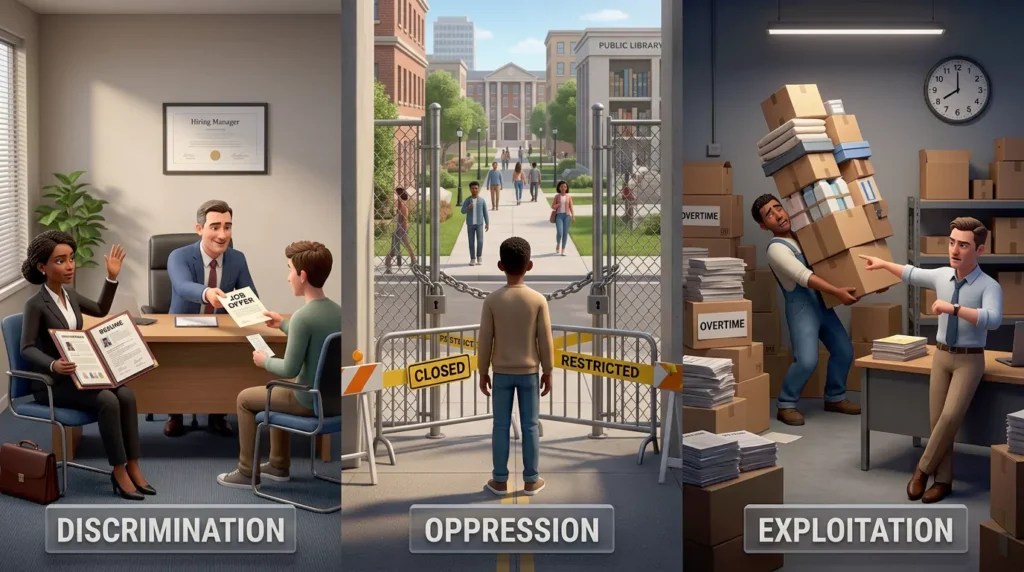
- Discrimination: Unfair treatment based on characteristics or group membership. Example: The organization introduced measures to prevent discrimination.
- Oppression: Prolonged or systematic unjust control over people. Example: The novel explores the effects of political oppression.
- Persecution: Hostile treatment targeting people because of their identity, beliefs, or group membership. Example: The historical account describes the persecution of religious minorities.
- Exploitation: Taking unfair advantage of people for personal gain. Example: The investigation exposed the exploitation of vulnerable workers.
- Abuse: Harmful or wrongful treatment of another person. Example: The report documented the abuse of authority.
- Tyranny: Cruel or oppressive exercise of power. Example: The speech condemned the tyranny of the ruling regime.
- Despotism: Government or control exercised with oppressive, unchecked power. Example: The historian examined the consequences of despotism.
- Marginalization: Pushing people toward the edges of social or economic life. Example: The initiative addressed the marginalization of disadvantaged communities.
- Exclusion: Keeping someone out of a group, activity, or opportunity. Example: Exclusion from training reduced her chances of promotion.
- Disenfranchisement: Depriving people of rights, especially voting rights or meaningful participation. Example: The reform aimed to prevent voter disenfranchisement.
- Subjugation: Forcing people into a position of submission or control. Example: The documentary examined the subjugation of local communities.
- Segregation: Separating groups, often through imposed social or institutional barriers. Example: The history lesson examined racial segregation.
- Victimization: Treating someone unfairly or making them suffer through harmful actions. Example: The employee reported victimization after raising concerns.
Legal Words for Injustice
- Denial of justice: A failure to provide fair and proper legal treatment. Example: The family believed the prolonged delay amounted to a denial of justice.
- Miscarriage of justice: A serious failure that produces an unjust legal outcome. Example: New evidence revealed a possible miscarriage of justice.
- Wrongful conviction: A conviction of someone who did not commit the crime. Example: DNA evidence helped overturn the wrongful conviction.
- Judicial error: A mistake made during a legal proceeding or judicial decision. Example: The appeal challenged a judicial error that affected the verdict.
- Judicial bias: Unfair prejudice or partiality affecting a judicial decision. Example: The defendant raised concerns about possible judicial bias.
- Due process violation: A failure to follow legally required procedures that protect a person’s rights. Example: The lawyer argued that the search involved a due process violation.
- Rights violation: An act that infringes a person’s legally or otherwise recognized rights. Example: The complaint described a serious rights violation.
- Unlawful treatment: Treatment that violates applicable law. Example: The inquiry examined allegations of unlawful treatment.
- Wrongful punishment: A penalty imposed unjustly or without proper grounds. Example: The review questioned whether the penalty amounted to wrongful punishment.
- Disproportionate punishment: A penalty that is excessive relative to the offense. Example: The committee reconsidered the disproportionate punishment.
- False accusation: An allegation that someone committed an act they did not commit. Example: The false accusation damaged his reputation.
- Impunity: Freedom from punishment or accountability for wrongdoing. Example: The investigation raised concerns about impunity among powerful officials.
- Legal wrong: An act or omission that violates a legal right or duty. Example: The lawyer explained why the conduct might constitute a legal wrong.
Words for Moral Wrongdoing
- Corruption: Dishonest or improper conduct, especially involving entrusted power. Example: The inquiry uncovered corruption in public procurement.
- Misconduct: Behavior that violates accepted professional, ethical, or institutional standards. Example: The review found evidence of serious misconduct.
- Malfeasance: Wrongful or illegal conduct, especially by someone in an official position. Example: Officials faced allegations of malfeasance.
- Abuse of power: Using authority improperly to benefit oneself or harm others. Example: The report criticized the manager’s abuse of power.
- Dishonesty: A lack of truthfulness or integrity. Example: Dishonesty undermined confidence in the investigation.
- Bad faith: Acting with dishonest intent or without genuine sincerity. Example: The negotiation failed because one party acted in bad faith.
- Betrayal: Breaking someone’s trust or loyalty. Example: The decision felt like a betrayal of the workers who supported the company.
- Treachery: Deliberate betrayal, often involving deception or disloyalty. Example: The story portrays the treachery of a trusted adviser.
- Breach of trust: Violating a responsibility or confidence placed in someone. Example: Sharing confidential records without permission was a breach of trust.
- Immorality: Conduct that conflicts with accepted moral principles. Example: The debate focused on the immorality of exploiting vulnerable people.
- Wickedness: Deliberate or extreme moral wrongdoing. Example: The novel presents the villain’s wickedness through repeated acts of cruelty.
- Ethical failure: A failure to meet moral or professional responsibilities. Example: Concealing the safety risks represented an ethical failure.
- Unscrupulousness: A willingness to act dishonestly without concern for fairness or principles. Example: His unscrupulousness became clear during the investigation.
Words for Social and Systemic Injustice
- Social injustice: Unfair treatment or conditions affecting people within society. Example: The campaign seeks to reduce social injustice.
- Economic injustice: Unfair economic conditions, practices, or distribution of resources. Example: The report examines economic injustice in low-income communities.
- Racial injustice: Unfair treatment or unequal outcomes associated with race. Example: The organization works to address racial injustice.
- Gender discrimination: Unfair treatment based on gender. Example: The complaint alleged gender discrimination in hiring.
- Sexism: Prejudice or discrimination based on sex or gender. Example: The training addressed sexism in the workplace.
- Racism: Prejudice, discrimination, or systems of disadvantage based on race. Example: The documentary explores how racism affects communities.
- Classism: Prejudice or discrimination based on social or economic class. Example: Classism can influence how people are treated in public institutions.
- Ableism: Prejudice or discrimination against people with disabilities. Example: Accessible policies can help challenge ableism.
- Systemic inequality: Unequal conditions maintained through connected social or institutional structures. Example: The research examined systemic inequality in education.
- Structural inequity: Unfair disadvantages built into systems, policies, or institutions. Example: The proposed changes aimed to reduce structural inequity.
- Deprivation: The loss or denial of something necessary or important. Example: The report documented the deprivation of basic services.
- Disadvantage: A condition that places someone in a less favorable position. Example: Limited transportation created a disadvantage for rural students.
- Unequal opportunity: A situation in which people lack fair access to opportunities. Example: Unequal opportunity can affect career development.
How to Choose the Right Synonym for Injustice
The best synonym depends on the cause, setting, and seriousness of the situation. Use unfairness for a broad lack of fairness. Choose inequity when unequal treatment or outcomes are central.
Use discrimination when unfair treatment relates to a person’s characteristics or group membership. Choose oppression when the situation involves sustained, unjust control. For legal situations, denial of justice or miscarriage of justice may be more precise.
Avoid replacing every instance of injustice with a stronger word. Terms such as corruption, persecution, and wrongful conviction have specific meanings. Use them only when the circumstances support them.
Injustice Synonyms Compared
| Word | Main meaning | Best context |
| Unfairness | Lack of fairness | Everyday situations |
| Inequity | Unfair differences in treatment or outcomes | Education, healthcare, policy |
| Inequality | Differences in status, resources, or opportunities | Social and economic analysis |
| Discrimination | Unfair treatment based on characteristics or group membership | Employment, education, civil rights |
| Oppression | Sustained, unjust control | Political and social discussions |
| Exploitation | Unfairly taking advantage of others | Labor, business, relationships |
| Corruption | Dishonest use of power | Government and institutions |
| Miscarriage of justice | Serious failure in a legal outcome | Courts and criminal justice |
| Abuse of power | Improper use of authority | Leadership and public office |
| Social injustice | Unfair social conditions or practices | Community and policy discussions |
Is Inequity the Same as Injustice?
Inequity is closely related to injustice, but the words are not identical. Inequity emphasizes unfair differences in treatment, opportunities, or outcomes. Injustice has a broader meaning and can include wrongful actions, unfair decisions, and violations of rights.
For example, inequity may describe unequal access to education. Injustice may describe that inequality or a specific wrongful decision affecting a student.
Is Discrimination a Synonym for Injustice?
Discrimination can be a form of injustice, but it has a more specific meaning. It involves unfair treatment connected to characteristics or group membership. Injustice also covers unfair punishment, corruption, legal errors, and other wrongful actions.
Which Synonym Is Best for Formal Writing?
Words such as inequity, discrimination, malfeasance, and denial of justice can suit formal writing. Choose the term that accurately describes the situation. Legal terminology should match the relevant facts and applicable law.
Antonyms of Injustice
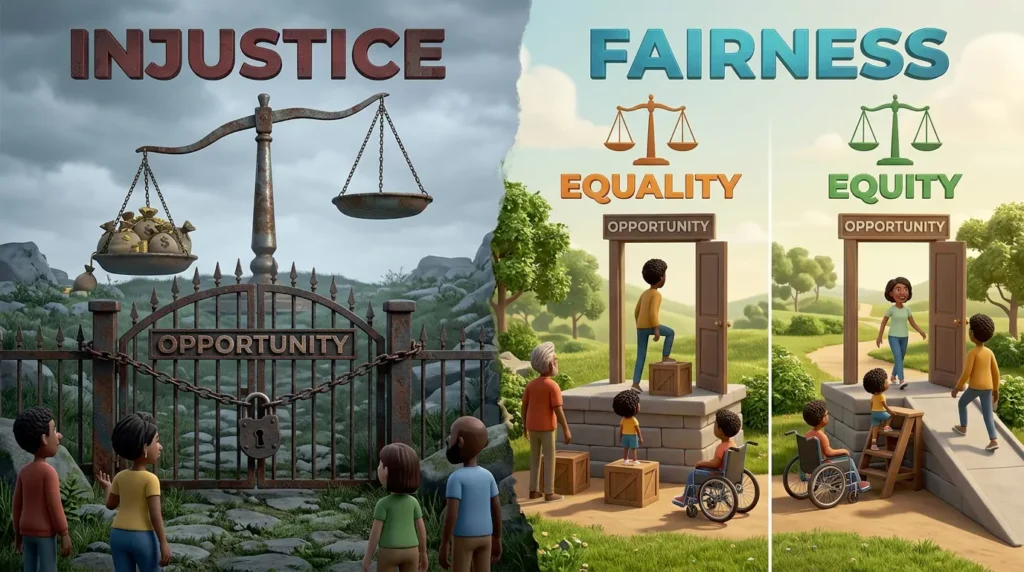
Antonyms express fairness, justice, or equal treatment. They help clarify the contrast between an unjust situation and a fair one.
| Antonym | Meaning | Example |
| Justice | Fair treatment under moral or legal principles | The community demanded justice. |
| Fairness | Impartial and reasonable treatment | Fairness guided the decision. |
| Equity | Fairness that considers different needs and circumstances | The program promotes equity in education. |
| Equality | Equal status, rights, or opportunities | Equality before the law is an important principle. |
| Impartiality | Freedom from favoritism or bias | The mediator maintained impartiality. |
| Integrity | Adherence to honest and ethical principles | Her integrity earned the team’s trust. |
| Righteousness | Conduct aligned with moral principles | The story explores righteousness and responsibility. |
Remember that equality and equity are related but distinct. Equality emphasizes equal treatment or status, while equity emphasizes fairness in light of relevant differences and needs.
Frequently Asked Questions
What Is the Closest Synonym for Injustice?
Unfairness is one of the closest everyday synonyms for injustice. Inequity is also suitable when unfair differences in treatment or outcomes are involved. The best choice depends on the context.
What Is Another Word for Injustice in Formal Writing?
Inequity, discrimination, oppression, and wrongdoing may suit formal writing. Legal contexts may require more specific terms, such as denial of justice or miscarriage of justice. Select words according to their precise meanings.
What Are Stronger Words for Injustice?
Oppression, persecution, exploitation, and tyranny can express severe forms of injustice. These terms are not interchangeable. Each describes a particular kind of harmful or unfair treatment.
What Is a Synonym for Social Injustice?
Related expressions include systemic inequality, structural inequity, discrimination, and unfair social conditions. Use the term that best identifies the underlying problem.
What Is the Difference Between Injustice and Inequality?
Injustice describes unfairness or a violation of justice. Inequality describes differences in status, resources, rights, or opportunities. Inequality can contribute to injustice, but not every difference is necessarily unjust.
What Are the Antonyms of Injustice?
Common antonyms include justice, fairness, equity, equality, and impartiality. These words describe fair treatment, just decisions, or balanced opportunities.
How Can I Use Injustice in a Sentence?
You can use injustice to describe an unfair action, decision, or condition. For example: “The new policy exposed an injustice that had affected families for years.”
Conclusion
The best synonyms for injustice depend on the situation you want to describe. Unfairness works for general situations, while inequity highlights unfair differences.
Discrimination describes specific forms of unequal treatment, and oppression emphasizes unjust control. Legal terms such as denial of justice describe more specialized circumstances.
Choose words according to their meaning, tone, and context. This approach makes essays, professional documents, and everyday communication more precise. When two alternatives seem similar, compare their definitions before using them interchangeably.

Nadeem Akhtar has a keen interest in the way words shape clear communication. Through SimpleSynonyms, he shares easy-to-understand resources on vocabulary, synonyms, meanings, and everyday English to help readers express themselves with greater confidence.