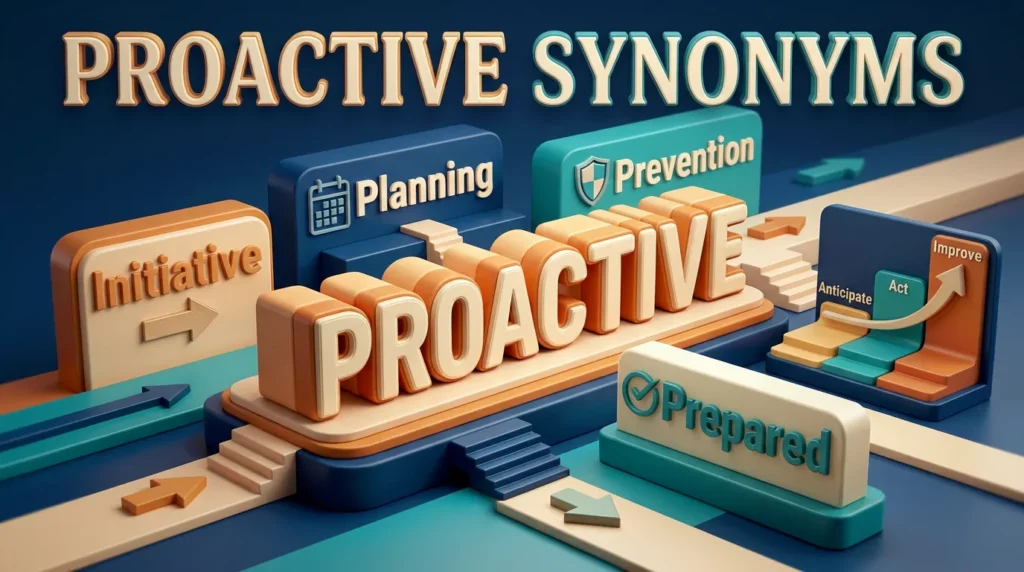

Finding the right proactive synonyms can make your writing clearer and more precise. The best alternative depends on what you want to communicate.
You might describe someone who takes initiative, plans ahead, prevents problems, or prepares for future challenges. Each situation may require a different word.
Useful alternatives include initiative-taking, forward-thinking, preventive, anticipatory, prepared, and enterprising. However, these words do not have exactly the same meaning.
This guide explains 60 alternatives to proactive, including their meanings, examples, and best uses. You will also learn how to choose the right word for professional writing and everyday communication.
What Does Proactive Mean?
Proactive means taking action before a problem develops or an opportunity disappears. It describes people who anticipate situations and act rather than simply wait.
For example:
- Proactive: She contacted the client before the deadline approached.
- Reactive: She contacted the client after the deadline was missed.
A proactive person identifies possible challenges and takes steps to address them early. This approach often involves planning, initiative, responsibility, and foresight.
The word commonly appears in workplaces, education, leadership, customer service, and personal development.
Best Synonyms for Proactive at a Glance
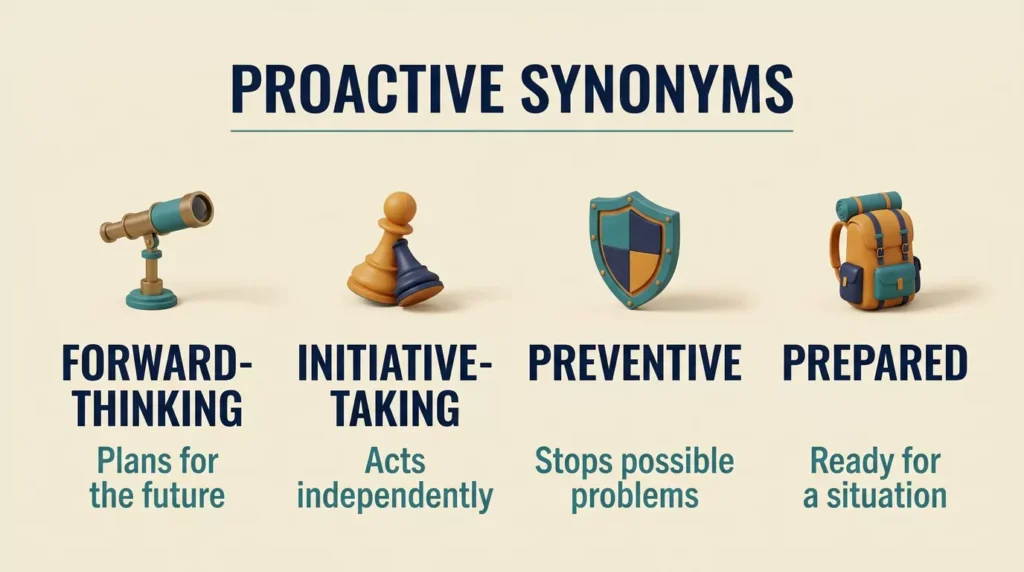
These alternatives are useful starting points when you need another word for proactive.
| Synonym | Meaning | Best context |
| Initiative-taking | Willing to start useful actions independently | Work and leadership |
| Forward-thinking | Considering future needs and possibilities | Strategy and planning |
| Preventive | Intended to stop problems before they occur | Safety and maintenance |
| Anticipatory | Based on expecting something in advance | Planning and preparation |
| Enterprising | Showing initiative and resourcefulness | Business and entrepreneurship |
| Self-starting | Beginning tasks without needing direction | Resumes and careers |
| Prepared | Ready for an expected situation | Everyday communication |
| Preemptive | Done before another event to prevent or gain an advantage | Strategy and risk management |
| Resourceful | Finding effective ways to handle challenges | Problem-solving |
| Foresighted | Able to anticipate future developments | Leadership and decision-making |
Choose the word that describes the specific behavior you want to highlight. A person can be prepared without taking initiative, for example.
1. Synonyms for Taking Initiative
These words describe people who act independently instead of waiting for instructions.
1. Initiative-taking
This describes someone who starts useful actions without being prompted.
Example: She took an initiative-taking approach to improving team communication.
Usage note: In natural writing, “proactive” or “shows initiative” often sounds smoother than “initiative-taking.”
2. Self-starting
A self-starting person begins work independently and maintains momentum.
Example: We need a self-starting employee who can manage projects independently.
3. Enterprising
Enterprising describes someone who uses initiative and resourcefulness to achieve results.
Example: His enterprising approach helped the company reach new customers.
4. Resourceful
A resourceful person finds practical solutions when facing difficulties.
Example: The resourceful manager solved the supply problem before production stopped.
5. Industrious
Industrious means hardworking and consistently productive.
Example: Her industrious approach helped the team complete its research early.
Usage note: Industrious emphasizes effort rather than anticipating problems.
6. Driven
A driven person has strong motivation to achieve goals.
Example: He is driven and regularly looks for ways to improve performance.
7. Motivated
Motivated describes someone who has a reason or desire to act.
Example: The motivated employee volunteered to improve the onboarding process.
8. Action-oriented
An action-oriented person focuses on practical steps and results.
Example: Our action-oriented team developed a solution before the issue escalated.
9. Self-motivated
A self-motivated person works toward goals without constant encouragement.
Example: She is self-motivated and regularly develops new professional skills.
10. Empowered
Empowered describes someone who has the confidence, authority, or resources to act.
Example: Empowered employees can resolve customer concerns without unnecessary delays.
Usage note: Empowered highlights the ability or authority to act, not necessarily anticipation.
2. Synonyms for Planning Ahead
Use these words when proactive describes anticipating future needs, risks, or opportunities.
11. Forward-thinking
Forward-thinking describes someone who considers future developments when making decisions.
Example: The forward-thinking director invested in staff training before demand increased.
12. Foresighted
Foresighted means able to anticipate future needs or consequences.
Example: Her foresighted planning helped the school prepare for rising enrolment.
13. Anticipatory
Anticipatory describes actions based on expecting a future event or need.
Example: The hospital introduced anticipatory measures for the busy winter season.
14. Strategic
Strategic means planned to achieve longer-term objectives.
Example: The strategic team identified possible challenges before launching the product.
Usage note: Strategic focuses on achieving objectives, while proactive emphasizes acting early.
15. Prescient
Prescient describes someone who correctly anticipates future developments.
Example: His prescient warning helped the company reconsider its investment.
Usage note: Prescient suggests unusually accurate foresight, not merely taking initiative.
16. Prudent
Prudent means showing careful judgment and considering possible consequences.
Example: It was prudent to review the contract before signing it.
17. Visionary
Visionary describes someone with an imaginative view of future possibilities.
Example: The visionary leader developed a long-term plan for sustainable growth.
Usage note: Visionary suggests ambitious future thinking rather than immediate action.
18. Planning-oriented
Planning-oriented describes someone who prefers organised preparation and advance decisions.
Example: Her planning-oriented approach reduced confusion during the project launch.
19. Future-focused
Future-focused describes decisions or actions centred on future needs and outcomes.
Example: The future-focused business invested in employee development.
20. Anticipative
Anticipative means involving anticipation of future events or requirements.
Example: The anticipative approach helped the team prepare for changing customer needs.
Usage note: Anticipative is less common in everyday English than “forward-thinking” or “anticipatory.”
3. Synonyms for Preventing Problems
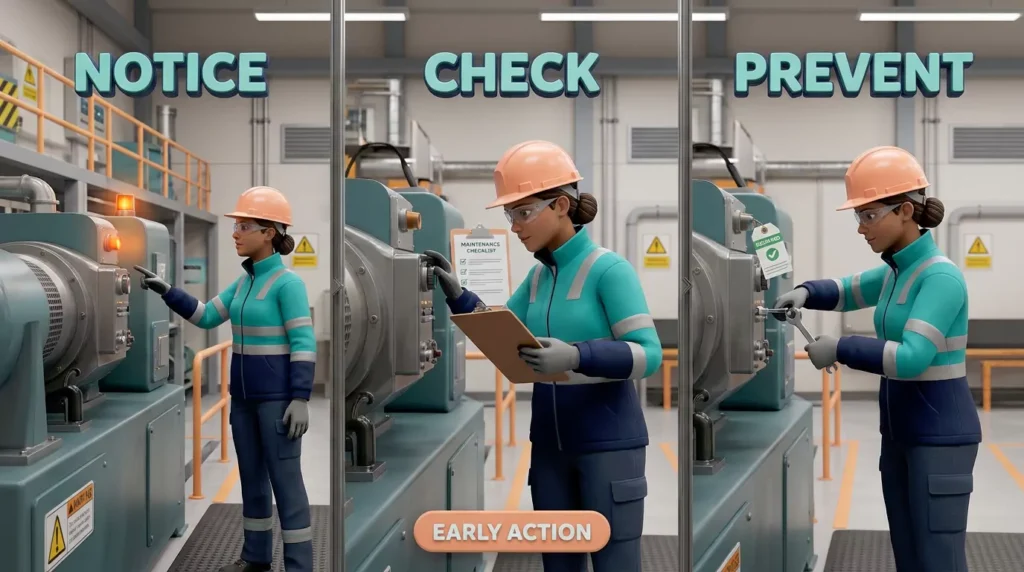
These alternatives emphasize reducing risks, avoiding difficulties, or addressing issues early.
21. Preventive
Preventive describes actions intended to stop a problem before it happens.
Example: Regular inspections are an important preventive measure.
22. Preventative
Preventative has the same general meaning as preventive.
Example: The company introduced preventative checks to reduce equipment failures.
Usage note: Both forms are accepted. Preventive is often the more concise choice.
23. Preemptive
Preemptive describes an action taken before an expected event, often to prevent it or gain an advantage.
Example: The manager made a preemptive change to avoid a scheduling conflict.
24. Precautionary
Precautionary describes measures taken to reduce possible danger or harm.
Example: Staff followed precautionary procedures during the repair work.
25. Preventative-minded
Preventative-minded describes someone who tends to consider risks and avoidable problems.
Example: A preventative-minded supervisor checks equipment before each shift.
Usage note: This is a descriptive expression rather than a standard one-word synonym.
26. Risk-aware
Risk-aware describes someone who recognises possible dangers and their consequences.
Example: A risk-aware team reviews potential problems before making commitments.
27. Preventive-minded
Preventive-minded describes a person who focuses on avoiding foreseeable difficulties.
Example: Her preventive-minded approach reduced repeated customer complaints.
Usage note: In polished writing, “focused on prevention” may sound more natural.
28. Vigilant
Vigilant means watchful and alert to possible danger or problems.
Example: The vigilant technician noticed the fault before the machine stopped.
29. Alert
Alert describes someone who notices what is happening and responds quickly.
Example: The alert receptionist identified a booking error before the customer arrived.
30. Safeguarding
Safeguarding describes actions or measures that protect people, assets, or systems.
Example: Safeguarding procedures helped protect confidential customer information.
Usage note: Safeguarding is a related noun or participle, not a direct replacement in every sentence.
4. Synonyms for Professional and Workplace Writing
These words help describe professional behavior, ownership, leadership, and workplace performance.
31. Responsible
Responsible describes someone who can be trusted to fulfil duties and obligations.
Example: She took responsible steps to address the team’s workload concerns.
32. Accountable
Accountable describes someone who accepts responsibility for decisions and outcomes.
Example: The accountable manager reviewed the problem and assigned corrective actions.
33. Conscientious
Conscientious describes someone who works carefully and takes duties seriously.
Example: His conscientious approach helped identify errors before the report was submitted.
34. Diligent
Diligent means showing steady, careful effort.
Example: The diligent analyst checked the figures before presenting the results.
35. Efficient
Efficient means achieving results with minimal wasted time or resources.
Example: Her efficient planning helped the team finish the project ahead of schedule.
Usage note: Efficiency concerns how work is completed, not necessarily when action begins.
36. Decisive
Decisive describes someone who makes decisions confidently and promptly.
Example: The decisive supervisor resolved the scheduling issue before it affected delivery.
37. Engaged
Engaged describes someone who is actively involved and interested in their work.
Example: Engaged employees often contribute useful ideas during team meetings.
38. Solution-oriented
Solution-oriented describes someone who focuses on resolving problems constructively.
Example: The solution-oriented manager proposed several ways to reduce delays.
39. Improvement-focused
Improvement-focused describes someone who actively seeks better methods or results.
Example: Her improvement-focused approach helped simplify the reporting process.
40. Ownership-minded
Ownership-minded describes someone who accepts responsibility and follows tasks through.
Example: An ownership-minded employee identifies problems and works towards practical solutions.
Usage note: “Takes ownership” is often more natural in professional writing.
5. Synonyms for Personal Qualities and Behavior
These alternatives describe characteristics that may support proactive behavior.
41. Confident
Confident describes someone who trusts their abilities or judgment.
Example: She confidently raised the concern before the project began.
42. Assertive
Assertive means expressing needs, views, or decisions clearly and respectfully.
Example: He took an assertive approach when discussing the unrealistic deadline.
Usage note: Assertiveness does not automatically mean someone anticipates problems.
43. Independent
Independent describes someone who can work without constant supervision.
Example: The independent researcher organised the study and managed its schedule.
44. Purposeful
Purposeful means acting with a clear aim or intention.
Example: Her purposeful actions helped the team meet its targets.
45. Persistent
Persistent describes someone who continues despite difficulties or delays.
Example: His persistent efforts helped resolve a complicated customer complaint.
Usage note: Persistence concerns continuing effort, while proactive behavior concerns acting ahead.
46. Ambitious
Ambitious describes someone who wants to achieve challenging goals.
Example: The ambitious graduate actively sought opportunities to develop new skills.
47. Curious
Curious describes someone who wants to learn, explore, or understand more.
Example: Her curious nature led her to investigate the problem before it grew.
48. Observant
Observant describes someone who notices details and changes around them.
Example: The observant employee noticed a pattern in customer complaints.
49. Adaptable
Adaptable describes someone who adjusts effectively to changing circumstances.
Example: The adaptable team revised its plan when customer needs changed.
50. Resourceful-minded
Resourceful-minded describes someone who tends to seek practical solutions.
Example: Her resourceful-minded approach helped the team manage limited supplies.
Usage note: This expression is uncommon. “Resourceful” is usually the better choice.
6. Synonyms for Being Prepared and Responsive
These alternatives suit situations involving readiness, timely responses, and changing circumstances.
51. Prepared
Prepared means ready for an expected event or situation.
Example: The prepared team had backup plans before the presentation.
52. Ready
Ready describes someone or something able to act when needed.
Example: The staff were ready to handle the increase in customer enquiries.
53. Well-prepared
Well-prepared means having made suitable arrangements or gathered necessary information.
Example: The well-prepared candidate anticipated questions about previous projects.
54. Organised
Organised describes someone who arranges tasks and resources systematically.
Example: Her organised approach helped prevent missed deadlines.
55. Responsive
Responsive means reacting promptly and appropriately to a request or situation.
Example: The responsive support team answered the customer’s concern quickly.
Usage note: Responsive often describes a reaction. It is not always a proactive alternative.
56. Agile
Agile describes someone who can adapt quickly to changing circumstances.
Example: The agile team adjusted its approach when the market changed.
57. Quick-thinking
Quick-thinking describes someone who makes effective decisions in an unexpected situation.
Example: The quick-thinking coordinator found an alternative venue when the room became unavailable.
58. Attentive
Attentive describes someone who pays close attention to people or details.
Example: The attentive adviser noticed that the customer needed further guidance.
59. Well-informed
Well-informed describes someone who has sufficient knowledge to make sound decisions.
Example: The well-informed manager considered the risks before approving the plan.
60. Preplanning
Preplanning means making arrangements or decisions before an activity begins.
Example: Preplanning helped the organisers manage the event without unnecessary delays.
Usage note: Preplanning is a noun or gerund, not a direct adjective replacement for proactive.
How to Choose the Right Proactive Synonym
The best alternative depends on the meaning, tone, and situation.
| Your intended meaning | Best word choices | Example |
| Starts work independently | Self-starting, initiative-taking | We need a self-starting team member. |
| Thinks about future needs | Forward-thinking, foresighted | Her forward-thinking strategy supported growth. |
| Prevents possible problems | Preventive, precautionary | The company introduced preventive checks. |
| Finds practical solutions | Resourceful, solution-oriented | He is resourceful when challenges arise. |
| Accepts responsibility | Accountable, conscientious | She is accountable for project delivery. |
| Prepares in advance | Prepared, anticipatory | The team took anticipatory action. |
| Responds quickly to change | Agile, responsive | The agile team adapted quickly. |
| Improves existing methods | Improvement-focused, diligent | He takes an improvement-focused approach. |
Before choosing a synonym, ask yourself what makes the person or action proactive. Is it foresight, initiative, prevention, preparation, or quick adaptation?
This simple question helps you select a more accurate word.
Proactive vs. Reactive vs. Preventive
These three words are related, but their meanings are different.
| Word | Main meaning | Example |
| Proactive | Takes action before a situation develops or worsens | The manager checked the schedule before delays occurred. |
| Reactive | Responds after a situation or problem appears | The manager changed the schedule after delays occurred. |
| Preventive | Aims to stop a particular problem from happening | The manager introduced preventive scheduling checks. |
Proactive is the broadest term of the three. It can include planning, improvement, prevention, and initiative.
Reactive describes a response to an existing event. Preventive specifically emphasizes avoiding a possible problem.
For example, a proactive teacher may contact struggling students early. A reactive teacher may respond after students fail an assessment. A preventive measure may involve regular progress checks.
Examples of Proactive in Sentences
Here are practical examples from everyday life, education, and professional communication.
Workplace Examples
- She took a proactive approach to resolving the team’s communication issues.
- Our proactive manager identified scheduling risks before the project began.
- The company adopted proactive measures to improve customer satisfaction.
- He is a self-starting employee who regularly suggests improvements.
- The forward-thinking director invested in training before new systems arrived.
Education Examples
- The proactive student asked questions before the examination.
- Teachers used preventive measures to reduce classroom disruptions.
- The school introduced an anticipatory plan for severe weather.
- She took initiative by organising a study group.
- The well-prepared student reviewed difficult topics before the test.
Everyday Life Examples
- I made a precautionary appointment before my symptoms worsened.
- He took a forward-thinking approach to managing his savings.
- She is resourceful and finds solutions before small problems grow.
- We prepared a backup plan in case the journey changed.
- The vigilant homeowner noticed a leaking pipe early.
Leadership Examples
- The proactive leader encouraged staff to report risks early.
- The accountable supervisor addressed the issue directly.
- The strategic director planned for future staffing needs.
- The solution-oriented manager focused on practical improvements.
- The decisive team leader resolved the conflict promptly.
How to Describe a Proactive Person
A proactive person does more than respond when something goes wrong. They look ahead, recognise needs, and take suitable action.
You can describe such a person in several ways.
- At work: A self-starting employee who identifies opportunities and acts independently.
- In leadership: A forward-thinking leader who anticipates challenges.
- In education: A motivated student who prepares before deadlines.
- In problem-solving: A resourceful person who finds practical solutions.
- In risk management: A vigilant professional who identifies potential hazards.
- In personal development: A driven individual who seeks opportunities to improve.
Choose the description that reflects actual behavior. Avoid calling someone visionary if they simply complete tasks on time.
Proactive Synonyms for Resumes and Cover Letters
When writing a resume, select a word that demonstrates a relevant skill. Specific examples are more convincing than general claims.
| Instead of writing | Consider writing | Example |
| Proactive employee | Self-starting professional | Self-starting professional who manages competing priorities independently. |
| Proactive leader | Forward-thinking leader | Forward-thinking leader who plans staffing needs ahead of expansion. |
| Proactive problem-solver | Solution-oriented professional | Solution-oriented professional who resolves recurring workflow issues. |
| Proactive team member | Initiative-taking team member | Team member who identifies process improvements and implements solutions. |
| Proactive planner | Strategic planner | Strategic planner who coordinates resources and anticipates project risks. |
| Proactive approach | Preventive approach | Introduced a preventive process that reduced avoidable errors. |
| Proactive attitude | Improvement-focused mindset | Maintains an improvement-focused mindset when reviewing team performance. |
Resume Writing Tips
- Choose words that match the role and your actual experience.
- Support claims with specific actions and outcomes.
- Use active verbs such as identified, introduced, developed, coordinated, and improved.
- Avoid stacking several synonyms into one sentence.
- Do not claim results or achievements you cannot support.
For example, “Introduced an early-warning process to identify delivery risks” is more informative than “Was very proactive.”
Common Mistakes When Using Proactive Synonyms
Treating Every Alternative as Identical
Words such as preventive, prepared, and responsive describe different behaviors.
Use preventive when avoiding a problem matters. Use prepared when readiness matters. Use responsive when reacting effectively matters.
Using Formal Words in Casual Conversations
Words such as prescient and anticipatory may sound unnecessarily formal in everyday communication.
For example, “She planned ahead” is often clearer than “She adopted an anticipatory approach.”
Confusing Activity With Initiative
Being busy does not automatically mean being proactive. A person may complete many tasks without anticipating future needs.
Choose words such as self-starting or initiative-taking when independent action is the main point.
Overusing Business Jargon
Phrases such as ownership-minded and improvement-focused may suit specific workplace documents. They can sound awkward in ordinary writing.
Prefer clear expressions such as “takes responsibility” or “looks for ways to improve.”
Using a Related Word in the Wrong Grammatical Form
Some alternatives are adjectives, while others are nouns or participles.
For example, proactive planning can become strategic planning. However, preplanning is a process, not a direct adjective replacement.
Check the sentence structure before substituting a word.
Antonyms of Proactive
Antonyms help explain proactive behavior by showing the opposite approach.
| Antonym | Meaning | Example |
| Reactive | Responds after something happens | The team reacted after the problem appeared. |
| Passive | Does not take an active role | He remained passive during the discussion. |
| Inactive | Not taking action | The inactive team made no progress. |
| Unprepared | Not ready for a situation | The unprepared group struggled with the deadline. |
| Hesitant | Slow or uncertain about acting | She was hesitant to make a decision. |
| Indifferent | Showing little interest or concern | The indifferent employee ignored the warning signs. |
| Neglectful | Failing to give proper attention | The neglectful approach allowed small errors to grow. |
| Unresponsive | Failing to respond appropriately | The unresponsive service team delayed assistance. |
These words have different meanings, so they are not interchangeable in every sentence. Reactive is often the clearest opposite when discussing timing.
Frequently Asked Questions
What Is the Best Synonym for Proactive?
The best synonym depends on the intended meaning. Initiative-taking suits independent action, while forward-thinking suits future planning. Preventive works best when avoiding problems is the main goal.
What Is a Professional Word for Proactive?
Forward-thinking, self-starting, strategic, and solution-oriented are useful professional alternatives. Choose the word that best describes the behavior or skill you want to highlight.
Is Proactive the Same as Preventive?
No. Proactive is a broad term for taking action ahead of a situation. Preventive specifically describes actions intended to stop problems from occurring.
What Is the Opposite of Proactive?
Reactive is often the closest opposite. A proactive person acts ahead of a situation, while a reactive person responds after it develops.
How Do You Describe a Proactive Person?
A proactive person anticipates needs, takes initiative, and acts before problems grow. Depending on the context, you might describe them as self-starting, forward-thinking, resourceful, or enterprising.
What Is Another Word for Proactive at Work?
Self-starting, initiative-taking, accountable, and solution-oriented can describe proactive workplace behavior. For a resume, support the chosen word with a concrete example.
Can Prepared Replace Proactive?
Sometimes, but the meanings differ. Prepared means ready for a situation, while proactive suggests taking action before it develops. Someone can be prepared without actively preventing problems.
What Is a Positive Word for Proactive?
Forward-thinking, resourceful, enterprising, and self-starting are positive alternatives. The best choice depends on whether you want to emphasise foresight, problem-solving, initiative, or independence.
How Can I Avoid Repeating Proactive in an Essay?
Replace repeated uses with more precise words. Consider preventive, strategic, forward-thinking, or initiative-taking when their meanings fit. You can also rewrite sentences to describe the actual action.
Is Proactive a Positive Word?
Yes, proactive generally has a positive meaning. It often suggests initiative, preparation, responsibility, and early action. However, its value depends on whether the action is appropriate and effective.
Conclusion
Proactive synonyms help you describe initiative, planning, prevention, and preparation more accurately.
Words such as forward-thinking, self-starting, preventive, and resourceful each highlight a different quality. Choose the one that matches the action, context, and tone.
For professional writing, use specific language and realistic examples. For everyday communication, prefer simple words that readers understand immediately.
The goal is not merely to replace proactive. It is to communicate exactly what the person did and why it mattered.

Nadeem Akhtar has a keen interest in the way words shape clear communication. Through SimpleSynonyms, he shares easy-to-understand resources on vocabulary, synonyms, meanings, and everyday English to help readers express themselves with greater confidence.