


Escape synonyms help you describe leaving danger, avoiding a difficult situation, gaining freedom, or taking a break.
Common alternatives include flee, get away, evade, avoid, elude, break free, and get out. However, each word has a different meaning and works best in specific contexts.
Choosing the right synonym makes your writing more precise. This guide explains useful alternatives to escape, with simple definitions, realistic examples, and practical comparisons.
What Does Escape Mean?
The word escape means to get away from a person, place, danger, restriction, or unwanted situation. It can describe physical movement, avoiding something unpleasant, or finding emotional relief.
For example, a person might escape a burning building, escape punishment, or escape daily stress through a relaxing holiday. These situations share the idea of getting away, but they require different words.
Common Synonyms for Escape
The following words are useful alternatives to escape. Their suitability depends on the situation, sentence structure, and intended meaning.
| Synonym | Meaning | Example Sentence |
| Flee | Leave a dangerous situation quickly | The villagers fled the approaching wildfire. |
| Evade | Avoid something unwanted or difficult to catch | The driver tried to evade the police. |
| Elude | Avoid capture or remain beyond someone’s reach | The suspect managed to elude investigators. |
| Avoid | Stay away from something undesirable | She avoided the argument by leaving early. |
| Get away | Leave a place or situation | We need to get away from the crowded city. |
| Get out | Leave a place or difficult situation | They got out before the storm arrived. |
| Depart | Leave a place | The passengers departed before sunrise. |
| Withdraw | Move away or remove yourself | He withdrew from the uncomfortable discussion. |
| Break free | Release yourself from restrictions | The prisoner struggled to break free. |
| Liberate | Free someone from control or confinement | The soldiers helped liberate the captured civilians. |
| Release | Allow someone or something to become free | The rescue team released the trapped animal. |
| Slip away | Leave quietly or unnoticed | She slipped away during the reception. |
| Sneak out | Leave secretly | The teenager tried to sneak out after midnight. |
| Run away | Leave a situation, often to avoid it | The frightened dog ran away from the noise. |
| Run off | Leave suddenly, sometimes without permission | The child ran off toward the playground. |
| Retreat | Move back from danger or pressure | The hikers retreated when the weather worsened. |
| Dodge | Avoid something by moving or acting quickly | He dodged the question during the interview. |
| Sidestep | Avoid a problem or direct response | The manager sidestepped the difficult question. |
| Circumvent | Find a way around a rule or obstacle | They circumvented the restriction through legal means. |
| Eliminate | Remove something completely | The new system eliminated unnecessary delays. |
| Escape from | Get away from a particular person or place | The family escaped from the flooded house. |
| Break away | Separate yourself from a group or control | She broke away from the controlling organisation. |
| Shake off | Free yourself from an unwanted influence | He struggled to shake off his fears. |
| Outrun | Run faster than someone pursuing you | The athlete outran his pursuers. |
| Outwit | Escape a problem by using clever thinking | The detective outwitted the criminal. |
| Survive | Remain alive despite danger | The crew survived the shipwreck. |
| Find refuge | Reach a place of safety | The families found refuge in a nearby shelter. |
| Seek shelter | Look for protection from danger or weather | The hikers sought shelter during the storm. |
| Get relief | Experience a reduction in discomfort or pressure | She took a short break to get relief from stress. |
| Take a break | Stop an activity temporarily | I took a break from work to clear my mind. |
Synonyms for Escaping Danger
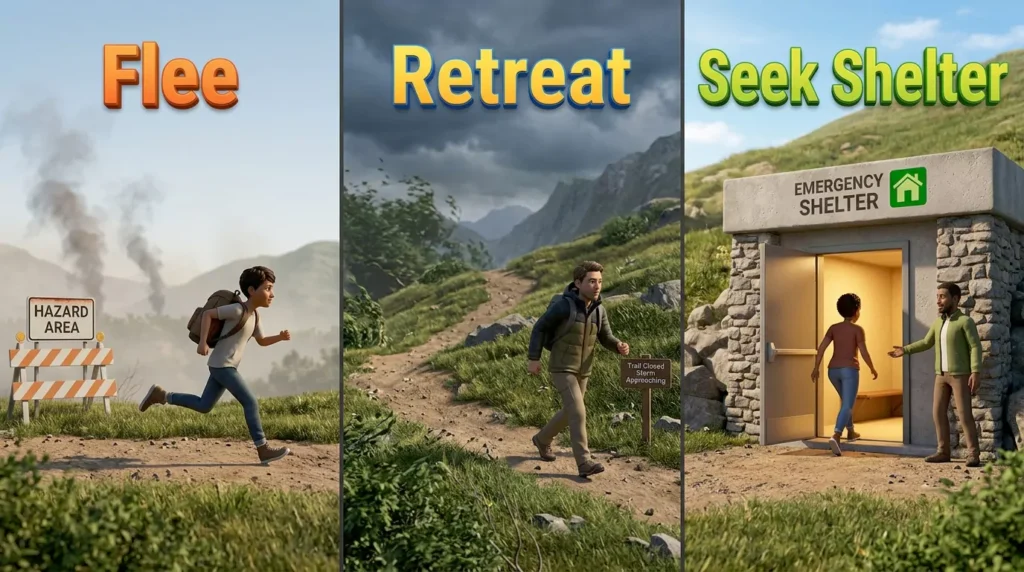
When someone escapes danger, the best alternatives often suggest urgency, movement, or reaching safety. Words such as flee, run away, get out, and retreat describe different ways of leaving a threatening situation.
Flee
Flee means to leave a dangerous or threatening place quickly. It often suggests fear, urgency, or an immediate threat.
Example: Residents fled their homes when the wildfire spread.
Run Away
Run away describes leaving a person or situation, often because of fear. It can also suggest avoiding responsibility or abandoning a commitment.
Example: The frightened horse ran away when the fireworks began.
Retreat
Retreat means moving back from danger, pressure, or opposition. It can sound more controlled or strategic than flee.
Example: The rescue team retreated when conditions became unsafe.
Get Out
Get out is an informal expression for leaving a place or situation. It works well in everyday conversation and urgent instructions.
Example: Everyone needed to get out of the building immediately.
Seek Shelter
Seek shelter means looking for a safe place from danger, harsh weather, or other threats. It describes the action of finding protection rather than simply leaving.
Example: The hikers sought shelter when the storm approached.
Synonyms for Avoiding Responsibility
Escape can also describe avoiding blame, punishment, duties, or uncomfortable questions. In these situations, words such as evade, avoid, dodge, and sidestep are often more precise.
Evade
Evade means avoiding something difficult, unwanted, or restrictive. It can imply deliberate action to escape a duty, question, or authority.
Example: The company tried to evade responsibility for the mistake.
Avoid
Avoid means keeping away from something or preventing contact with it. It is a neutral, everyday alternative that does not always suggest dishonesty.
Example: He avoided discussing the disagreement during dinner.
Dodge
Dodge suggests avoiding something quickly or cleverly. It often describes difficult questions, criticism, or unwanted demands.
Example: The spokesperson dodged questions about the missing documents.
Sidestep
Sidestep means avoiding an issue instead of addressing it directly. It is particularly useful in professional and political writing.
Example: The director sidestepped the question about budget cuts.
Circumvent
Circumvent means finding a way around an obstacle, restriction, or rule. It can be neutral, but it may suggest an attempt to bypass established requirements.
Example: The team found a lawful way to circumvent the technical obstacle.
Important distinction: avoiding a responsibility is not always the same as evading accountability. Choose a word that accurately reflects the person’s actions and intentions.
Synonyms for Gaining Freedom
When escape means becoming free from control, imprisonment, or restrictions, words such as break free, liberate, release, and break away may fit better.
Break Free
Break free means escaping a restriction, controlling influence, or physical restraint. It can describe both literal and figurative freedom.
Example: She worked hard to break free from an unhealthy relationship.
Liberate
Liberate means freeing a person or group from control, oppression, or confinement. It often has a formal or serious tone.
Example: The campaign aimed to liberate people from oppressive restrictions.
Release
Release means allowing someone or something to become free. Unlike escape, it often involves another person or authority allowing freedom.
Example: The authorities agreed to release the wrongly detained man.
Break Away
Break away means separating from a group, organisation, or controlling influence. It often suggests independence or a change in direction.
Example: The region voted to break away from the larger political union.
Shake Off
Shake off means getting rid of something unwanted, such as fear, pressure, or an unwanted pursuer. It is often figurative.
Example: He took a quiet walk to shake off the day’s stress.
Synonyms for Relaxation and Getting Away
Sometimes escape means taking a break from routine rather than fleeing danger. Words such as getaway, retreat, break, and time away communicate this meaning more naturally.
Getaway
A getaway is a short trip taken for relaxation or enjoyment. It often suggests a welcome change from everyday responsibilities.
Example: They planned a weekend getaway to the mountains.
Retreat
A retreat can describe a peaceful place or planned period for rest, reflection, or focused work. Its meaning depends on context.
Example: She booked a wellness retreat to recover from a demanding schedule.
Take a Break
Take a break means pausing an activity to rest or recover. It is suitable for everyday conversations and workplace writing.
Example: I took a break from studying before the final exam.
Unwind
Unwind means relaxing after stress or activity. It describes reducing tension rather than physically leaving a place.
Example: He listens to music to unwind after work.
Get Some Breathing Room
This expression means gaining temporary space, time, or relief from pressure. It is informal and often figurative.
Example: The extra week gave the team some breathing room.
Find an Escape
Find an escape means discovering a way to leave a difficult situation or temporarily forget everyday pressures. It can be literal or figurative.
Example: Reading became her escape from a stressful routine.
Escape Synonyms in Example Sentences
The same word can require different synonyms depending on the intended meaning. Compare these examples to choose more accurate wording.
| Original Sentence | Alternative Sentence | Context |
| The family escaped the fire. | The family fled the fire. | Immediate danger |
| He escaped answering the question. | He evaded answering the question. | Avoiding a response |
| The prisoner escaped confinement. | The prisoner broke free from confinement. | Gaining freedom |
| We escaped the daily routine. | We took a break from the daily routine. | Rest and relief |
| The suspect escaped capture. | The suspect eluded capture. | Avoiding detection |
| She escaped the crowded event. | She slipped away from the crowded event. | Leaving quietly |
| They escaped the restrictions. | They broke free from the restrictions. | Ending limitations |
| He escaped the difficult discussion. | He sidestepped the difficult discussion. | Avoiding confrontation |
Differences Between Escape and Similar Words
Many words overlap with escape, but they are not exact replacements. Understanding their differences improves clarity and prevents awkward sentences.
| Word | Main Difference | Best Use |
| Escape | Broad term for getting away or becoming free | General situations |
| Flee | Emphasises urgent departure from danger | Emergencies and threats |
| Evade | Emphasises deliberate avoidance | Duties, questions, or authorities |
| Elude | Emphasises avoiding capture or detection | Pursuits and investigations |
| Avoid | Means staying away from something | Everyday decisions |
| Retreat | Suggests moving back from danger or pressure | Strategic withdrawal |
| Liberate | Emphasises freeing someone from control | Oppression or confinement |
| Withdraw | Suggests removing yourself from involvement | Meetings, discussions, or activities |
| Getaway | Usually means a short leisure trip | Travel and relaxation |
| Unwind | Means relaxing and reducing tension | Stress relief |
When Should You Use Escape Instead?
Use escape when you want a broad term that covers leaving, avoiding, or becoming free. It is often the clearest choice when the exact method does not matter.
Use a more specific alternative when you need to emphasise urgency, secrecy, avoidance, or freedom. For example, flee conveys urgency, while evade often highlights deliberate avoidance.
Antonyms of Escape
Antonyms describe the opposite meaning of escape. The best choice depends on whether escape refers to leaving, avoiding, or becoming free.
| Antonym | Meaning | Example Sentence |
| Remain | Stay in a place | They remained inside during the storm. |
| Stay | Continue being somewhere | She decided to stay at home. |
| Face | Confront a situation directly | He chose to face his fears. |
| Confront | Deal with a problem directly | The team confronted the issue immediately. |
| Endure | Continue through a difficult experience | They endured the difficult conditions. |
| Submit | Yield to authority or pressure | The group refused to submit to unfair demands. |
| Surrender | Give up resistance | The soldiers surrendered after negotiations. |
| Confrontation | Directly facing a conflict or challenge | The issue required direct confrontation. |
These antonyms are not interchangeable. For example, remain contrasts with leaving, while face contrasts with avoiding a problem.
Frequently Asked Questions
What Is the Closest Synonym for Escape?
Get away is a useful everyday alternative. However, flee, evade, elude, and break free may be more accurate in specific situations.
What Is a Formal Word for Escape?
Evade, elude, withdraw, and depart can work in formal writing. The best option depends on whether the subject leaves a place, avoids an obligation, or avoids capture.
What Is Another Word for Escaping Danger?
Flee, run away, get out, and retreat are common alternatives. Use seek shelter when the main action involves finding protection.
What Is a Synonym for Escape in a Sentence About Stress?
Unwind, take a break, get away, and find relief can fit. Choose unwind when you mean relaxing, or get away when you mean leaving a stressful environment.
Are Escape and Evade the Same?
No. Escape broadly means getting away or becoming free. Evade specifically emphasises avoiding something, such as responsibility, detection, or an unwanted question.
What Is the Difference Between Escape and Elude?
Escape describes getting away from a situation or restriction. Elude usually emphasises successfully avoiding capture, detection, or someone’s grasp.
What Is the Opposite of Escape?
Possible antonyms include remain, stay, face, confront, and endure. The correct choice depends on the intended meaning.
What Is a Positive Word for Escape?
Getaway, retreat, and unwind can express a positive desire for rest or relief. Liberate can describe a positive release from restrictions or oppression.
Conclusion
Escape synonyms help you communicate more clearly in everyday conversation, academic writing, and professional communication. Use flee for urgent departure, evade for deliberate avoidance, and elude for avoiding capture.
Choose break free when describing independence, or unwind when discussing relaxation. For a short holiday, getaway is often more natural.
Always consider the context, tone, and intended meaning before replacing escape with another word. The right alternative makes your sentence more precise and easier to understand.

Nadeem Akhtar has a keen interest in the way words shape clear communication. Through SimpleSynonyms, he shares easy-to-understand resources on vocabulary, synonyms, meanings, and everyday English to help readers express themselves with greater confidence.