


SEO Title: 60+ Synonyms for Thoughtful With Meanings and Examples
Meta Description: Explore 60+ synonyms for thoughtful, with clear meanings and examples. Find the right word for kindness, deep thinking, and professional writing.
URL Slug: synonyms-for-thoughtful
60+ Synonyms for Thoughtful With Meanings and Examples
Finding the right synonyms for thoughtful can make your writing clearer and more expressive. The best alternative depends on what you want to communicate.
Sometimes, thoughtful describes someone who cares about others. In other situations, it describes careful thinking or sensible decisions.
Words such as considerate, reflective, perceptive, and mindful offer different meanings. This guide explains 64 alternatives, including their definitions and example sentences.
You will also discover which words suit personal messages, professional writing, and everyday conversations.
What Does Thoughtful Mean?
The word thoughtful has two main meanings.
First, it describes someone who considers other people’s feelings and needs. A thoughtful person might offer help, remember an important date, or choose a meaningful gift.
Second, thoughtful describes someone who thinks carefully before reaching a conclusion. A thoughtful decision considers relevant information, possible outcomes, and different perspectives.
For example:
- Considerate meaning: She was thoughtful enough to check whether everyone felt comfortable.
- Reflective meaning: He wrote a thoughtful essay about his experiences.
These examples show why context matters. A word describing kindness might not suit a sentence about careful analysis.
Synonyms for Thoughtful That Show Care and Kindness
Use these alternatives when describing someone who considers other people’s feelings, comfort, or needs.
- Considerate: Careful not to upset or inconvenience others. Example: It was considerate of him to offer everyone a lift home.
- Caring: Showing concern and affection for other people. Example: Her caring nature made everyone feel welcome.
- Kind: Friendly, generous, and considerate towards others. Example: He was kind enough to help his neighbour move.
- Attentive: Paying close attention to someone’s needs or concerns. Example: The attentive nurse noticed that the patient felt uncomfortable.
- Compassionate: Showing sympathy and concern for someone experiencing difficulty. Example: The compassionate teacher supported the struggling student.
- Empathetic: Understanding or sharing another person’s feelings. Example: An empathetic manager listened carefully to her concerns.
- Sensitive: Recognising and responding carefully to other people’s emotions. Example: He gave a sensitive response to her difficult news.
- Mindful: Remaining aware of other people’s needs and circumstances. Example: She was mindful of the family’s limited time.
- Observant: Noticing details that other people might overlook. Example: The observant host noticed that his guest needed assistance.
- Supportive: Offering encouragement, help, or reassurance. Example: Her supportive colleagues helped her settle into the new role.
- Helpful: Willing to make a situation easier for someone. Example: It was helpful of him to explain the instructions.
- Generous: Freely giving time, help, resources, or kindness. Example: Their generous neighbour brought meals during the recovery period.
- Gracious: Showing kindness, politeness, and good manners. Example: She gave a gracious reply despite the disagreement.
- Tactful: Choosing words carefully to avoid unnecessary offence. Example: He offered tactful feedback about the presentation.
- Warmhearted: Showing warmth, affection, and genuine kindness. Example: The warmhearted volunteer welcomed every visitor.
- Solicitous: Showing attentive concern for someone’s comfort or welfare. Example: Her solicitous friend regularly checked whether she needed anything.
Synonyms for Thoughtful That Describe Deep Thinking
These words suit people who reflect carefully, examine ideas, or consider difficult questions.
- Reflective: Given to careful thought about experiences or ideas. Example: He took a reflective approach to the problem.
- Contemplative: Spending time thinking deeply about something. Example: She enjoyed quiet, contemplative walks beside the lake.
- Pensive: Quietly absorbed in serious or slightly sad thoughts. Example: He looked pensive while reading the letter.
- Meditative: Involving calm, sustained thought or meditation. Example: The garden provided a peaceful, meditative setting.
- Introspective: Examining your own thoughts, feelings, and behaviour. Example: Her introspective journal explored her personal growth.
- Analytical: Examining information logically and systematically. Example: His analytical report identified the main causes of the problem.
- Deliberative: Carefully considering information before making a decision. Example: The committee adopted a deliberative approach to the proposal.
- Reasoned: Based on logic, evidence, and careful consideration. Example: She presented a reasoned argument for changing the policy.
- Deep-thinking: Inclined to consider ideas beyond their obvious meaning. Example: The deep-thinking student asked challenging questions about the topic.
- Philosophical: Concerned with fundamental questions about knowledge, life, or existence. Example: Their philosophical discussion continued late into the evening.
- Discerning: Able to recognise important differences and make sound judgements. Example: A discerning reader can identify weaknesses in an argument.
- Perceptive: Quick to notice and understand important details. Example: Her perceptive comments revealed the problem’s underlying cause.
- Insightful: Showing a deep or accurate understanding of something. Example: The insightful article explained why the project struggled.
- Curious: Eager to learn, investigate, or understand something. Example: His curious nature encouraged him to explore unfamiliar ideas.
- Questioning: Inclined to examine ideas instead of accepting them immediately. Example: Her questioning approach encouraged the team to challenge assumptions.
- Studious: Devoting careful attention to learning or study. Example: The studious researcher reviewed the evidence before publishing.
Synonyms for Thoughtful in Professional Writing
These alternatives can describe decisions, planning, analysis, and professional judgement. Choose a word that reflects the specific quality you mean.
- Prudent: Showing good judgement about risks and possible outcomes. Example: It was prudent to review the contract before signing.
- Judicious: Demonstrating sound judgement when choosing or deciding. Example: The director made a judicious use of the available budget.
- Wise: Showing good judgement based on knowledge or experience. Example: Seeking advice was a wise decision.
- Sensible: Practical and reasonable in the circumstances. Example: The team selected a sensible solution to the scheduling problem.
- Careful: Giving attention to details, risks, or possible mistakes. Example: A careful review revealed several missing figures.
- Deliberate: Done intentionally or after careful consideration. Example: The company made a deliberate effort to improve communication.
- Intentional: Planned or chosen rather than accidental. Example: Her intentional approach kept the project focused.
- Purposeful: Showing clear intention and direction. Example: The manager took purposeful steps towards resolving the issue.
- Well-considered: Based on careful thought and evaluation. Example: The proposal offered a well-considered response to customer concerns.
- Measured: Showing restraint and careful judgement. Example: His measured response prevented the disagreement from escalating.
- Cautious: Taking care to avoid unnecessary risks. Example: The investors adopted a cautious approach to the uncertain market.
- Methodical: Following an organised and systematic process. Example: Her methodical research helped identify the source of the error.
- Thorough: Complete and attentive to important details. Example: The inspector conducted a thorough assessment of the building.
- Meticulous: Extremely careful about accuracy and detail. Example: His meticulous editing improved the final report.
- Systematic: Using an organised method to complete or investigate something. Example: The team used a systematic process to compare suppliers.
- Circumspect: Careful to consider potential consequences before acting. Example: The board remained circumspect when discussing the proposed merger.
More Words Similar to Thoughtful
Some alternatives describe sincerity, emotional understanding, respect, or intelligent judgement. Their suitability depends on the sentence.
- Meaningful: Having significance, purpose, or emotional value. Example: Their meaningful conversation strengthened the friendship.
- Profound: Showing great depth of thought, feeling, or understanding. Example: The book offered a profound observation about human nature.
- Serious: Showing careful attention to an important matter. Example: She gave serious consideration to the offer.
- Earnest: Showing sincere and serious intention. Example: He made an earnest effort to understand the complaint.
- Sincere: Genuine in feelings, intentions, or expressions. Example: Her sincere apology helped repair the relationship.
- Heartfelt: Expressing deep and genuine emotion. Example: They sent a heartfelt message after hearing the news.
- Genuine: Authentic rather than false or insincere. Example: His genuine concern made the conversation more comfortable.
- Respectful: Showing regard for other people’s feelings, rights, or opinions. Example: She offered respectful feedback during the meeting.
- Appreciative: Recognising and valuing someone’s efforts or kindness. Example: He wrote an appreciative note to his mentor.
- Affectionate: Showing fondness, warmth, or love. Example: Her affectionate message brightened his difficult day.
- Tender: Showing gentle care, affection, or sensitivity. Example: He gave the child a tender smile.
- Understanding: Showing sympathy and awareness of another person’s circumstances. Example: Her understanding response helped him explain the mistake.
- Accommodating: Willing to adjust to another person’s needs or preferences. Example: The accommodating host changed the dinner arrangements.
- Patient: Able to remain calm while waiting or dealing with difficulties. Example: The patient tutor explained the lesson again.
- Diplomatic: Handling sensitive situations with tact and care. Example: His diplomatic wording helped resolve the disagreement.
- Astute: Quick to understand situations and recognise what matters. Example: Her astute observation improved the team’s strategy.
- Sagacious: Showing sound judgement and practical wisdom. Example: The sagacious adviser considered the long-term consequences.
- Level-headed: Remaining calm and sensible in difficult situations. Example: His level-headed response reassured the entire team.
- Mature: Showing emotional balance, responsibility, and sound judgement. Example: She took a mature approach to the disagreement.
- Strategic: Carefully planned to achieve a particular objective. Example: The business adopted a strategic approach to expansion.
- Rational: Based on reason and logical thinking. Example: They reached a rational conclusion after reviewing the evidence.
- Well-planned: Arranged carefully in advance. Example: The well-planned event ran smoothly from start to finish.
Best Synonyms for Thoughtful in Different Contexts
The best replacement depends on the meaning you want to preserve.
| Context | Suitable synonym | Example |
| Caring about others | Considerate | That was a considerate thing to do. |
| Understanding feelings | Empathetic | She offered an empathetic response. |
| Thinking deeply | Reflective | He wrote a reflective account of his experience. |
| Analysing information | Analytical | She provided an analytical review. |
| Making careful decisions | Prudent | A prudent choice reduced the risk. |
| Giving careful feedback | Tactful | He made a tactful suggestion. |
| Expressing genuine emotion | Heartfelt | They shared a heartfelt message. |
| Planning carefully | Well-considered | The team presented a well-considered plan. |
| Showing sound judgement | Judicious | She made a judicious decision. |
| Noticing important details | Perceptive | His perceptive comment identified the issue. |
| Remaining calm | Level-headed | The level-headed manager handled the crisis. |
| Showing affection | Warmhearted | Her warmhearted welcome reassured everyone. |
Thoughtful vs. Considerate vs. Reflective
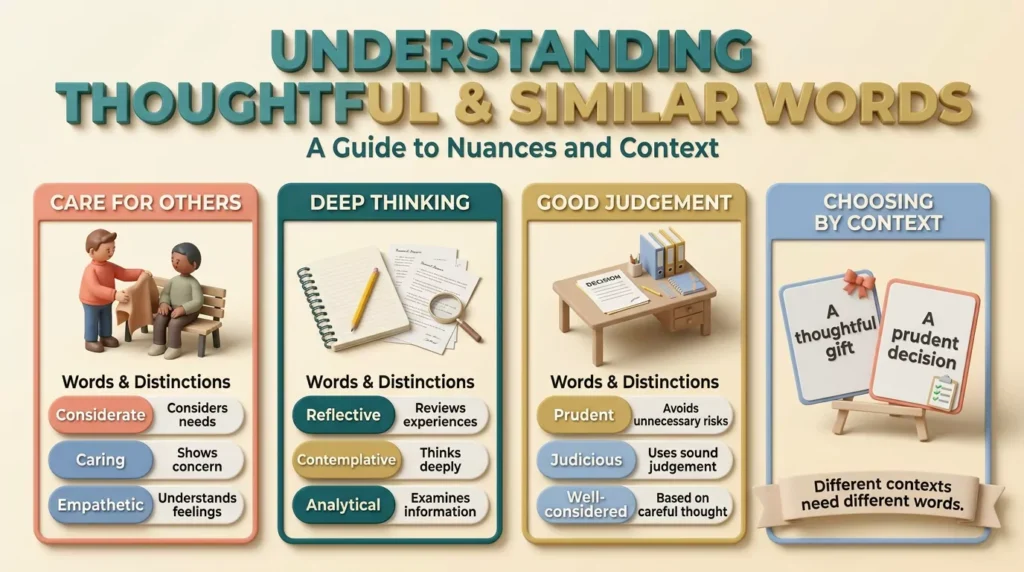
These three words overlap, but they describe different qualities.
| Word | Main meaning | Best use | Example |
| Thoughtful | Showing consideration or careful thinking | General descriptions of behaviour or ideas | That was a thoughtful gift. |
| Considerate | Taking other people’s needs into account | Kind behaviour towards others | It was considerate to call first. |
| Reflective | Thinking carefully about experiences or ideas | Essays, personal development, and analysis | She wrote a reflective journal entry. |
Use thoughtful when you want a broad description. Choose considerate when kindness towards others matters most.
Use reflective when the focus is careful thinking rather than kindness.
Thoughtful vs. Mindful
Thoughtful often suggests consideration or deliberate reflection. Mindful emphasises awareness of something important.
Example: A thoughtful colleague offers help. A mindful colleague remembers the team’s time constraints.
Thoughtful vs. Perceptive
Thoughtful describes careful consideration or concern. Perceptive describes the ability to notice and understand details.
Example: A thoughtful friend sends encouragement. A perceptive friend recognises when you need support.
Thoughtful vs. Prudent
Thoughtful is broad and may describe kindness or reflection. Prudent specifically suggests sensible judgement about risks and consequences.
Example: A thoughtful message expresses care. A prudent decision avoids unnecessary financial risk.
How to Choose the Right Synonym for Thoughtful
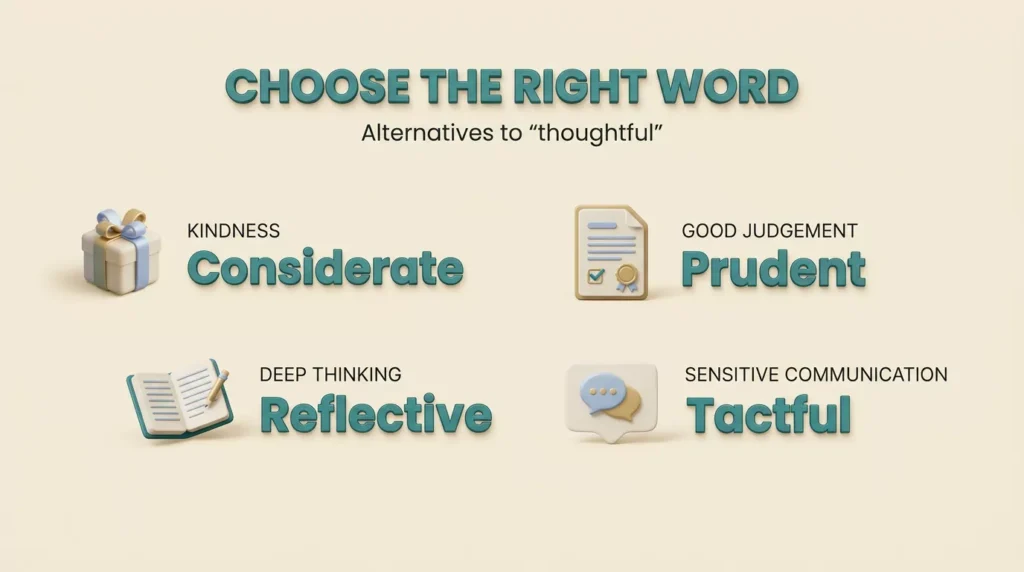
Follow these steps to find the most accurate alternative.
1. Identify the Intended Meaning
Ask what thoughtful describes in your sentence.
If it describes kindness, consider considerate, caring, or empathetic. If it describes thinking, consider reflective, analytical, or contemplative.
2. Match the Tone
Some words sound warmer, while others sound more formal.
- Everyday language: kind, caring, considerate, helpful.
- Professional writing: judicious, prudent, deliberate, well-considered.
- Academic writing: analytical, reflective, reasoned, insightful.
- Personal messages: heartfelt, sincere, affectionate, understanding.
3. Check the Sentence Structure
Not every synonym fits every grammatical construction.
For example, “a thoughtful decision” can become “a prudent decision.” However, “a thoughtful gift” would not normally become “a prudent gift.”
Choose words that preserve the original meaning and sound natural.
4. Avoid Unnecessary Complexity
A simple word often communicates an idea more effectively than an unusual alternative.
Use considerate instead of solicitous when writing for a general audience. Choose prudent when the sentence concerns risks or consequences.
5. Read the Sentence Again
Check whether the replacement preserves the intended meaning, tone, and context.
If the sentence sounds unnatural, choose another word.
Antonyms of Thoughtful
Antonyms help explain the qualities that thoughtful behaviour or thinking lacks.
| Antonym | Meaning | Example |
| Thoughtless | Showing little consideration or care | His thoughtless comment upset the team. |
| Inconsiderate | Failing to consider other people’s needs | It was inconsiderate to interrupt repeatedly. |
| Careless | Not giving enough attention to something | A careless error changed the result. |
| Selfish | Mainly concerned with personal interests | His selfish behaviour damaged the friendship. |
| Uncaring | Showing little concern for others | The response seemed uncaring and dismissive. |
| Impulsive | Acting suddenly without sufficient consideration | An impulsive decision created unnecessary problems. |
| Reckless | Taking risks without proper care | Their reckless approach endangered the project. |
| Superficial | Lacking depth or serious consideration | The report offered a superficial analysis. |
| Inattentive | Failing to pay proper attention | The inattentive listener missed an important detail. |
| Unreflective | Not examining ideas or experiences carefully | His unreflective response ignored the wider issue. |
Remember that the opposite depends on context. Thoughtless and inconsiderate often oppose kindness, while unreflective better contrasts with careful thinking.
Frequently Asked Questions
What Is the Best Synonym for Thoughtful?
Considerate is often the best synonym when describing kindness towards others. Reflective is suitable when describing careful thinking. The correct choice depends on context.
What Is Another Word for Thoughtful and Caring?
Considerate, compassionate, empathetic, kind, and warmhearted are useful alternatives. Each emphasises a slightly different quality.
Considerate highlights awareness of others’ needs. Compassionate emphasises concern for suffering, while empathetic focuses on understanding feelings.
What Is a Professional Word for Thoughtful?
Prudent, judicious, deliberate, and well-considered are useful in professional contexts.
For example, “a thoughtful decision” could become “a judicious decision” when discussing sound judgement.
What Is a More Sophisticated Word for Thoughtful?
Discerning, contemplative, sagacious, and perceptive can sound more sophisticated.
However, these words are not interchangeable. Discerning emphasises judgement, contemplative suggests deep thinking, and perceptive highlights understanding.
What Is a Positive Word for Thoughtful?
Considerate, compassionate, insightful, prudent, and caring are positive alternatives.
Choose considerate for kindness, insightful for understanding, and prudent for sensible decisions.
How Can I Describe a Thoughtful Person?
You could describe the person as considerate, empathetic, attentive, caring, or reflective.
Use considerate when they respect others’ needs. Use reflective when they regularly examine their thoughts and experiences.
What Is the Difference Between Thoughtful and Considerate?
Thoughtful can describe both kindness and careful thinking. Considerate specifically describes behaviour that takes other people’s feelings or needs into account.
For example, a thoughtful essay explores an idea carefully. A considerate colleague respects other people’s time.
What Is the Opposite of Thoughtful?
Thoughtless is a common opposite when describing behaviour that lacks care. Inconsiderate also describes behaviour that ignores other people’s needs.
For careful thinking, unreflective or superficial may be more appropriate.
Can Thoughtful Mean Intelligent?
Sometimes, but the words have different meanings. Thoughtful suggests careful consideration, while intelligent describes the ability to learn, reason, and understand.
Perceptive or insightful may work better when you mean someone understands something deeply.
How Do I Use Thoughtful in a Sentence?
Use thoughtful to describe considerate actions or careful ideas.
Examples:
- She gave her friend a thoughtful birthday present.
- He offered a thoughtful response to the difficult question.
- The team developed a thoughtful plan for the project.
- Her thoughtful comments helped everyone understand the issue.
Conclusion
The best synonyms for thoughtful depend on the meaning you want to express. Considerate, caring, and empathetic describe kindness towards others.
Reflective, contemplative, and analytical describe different forms of careful thinking. Prudent, judicious, and well-considered suit decisions and professional writing.
Heartfelt, sincere, and understanding work well in personal communication. Choose the word that matches your context, tone, and intended meaning.
Using precise alternatives makes your writing more natural, clear, and engaging.

Nadeem Akhtar has a keen interest in the way words shape clear communication. Through SimpleSynonyms, he shares easy-to-understand resources on vocabulary, synonyms, meanings, and everyday English to help readers express themselves with greater confidence.