


Happiness synonyms help you express positive feelings more clearly. Words such as joy, delight, bliss, and contentment describe different kinds of happiness. However, they are not always interchangeable.
Some words describe intense excitement. Others express quiet satisfaction or lasting well-being. Choosing the right word makes your writing more natural and precise.
This guide explores happiness synonyms with meanings, examples, context-based categories, and useful comparisons. You will also learn how to choose suitable alternatives for essays, conversations, and creative writing.
What Does Happiness Mean?
Happiness is a positive emotional state associated with pleasure, satisfaction, joy, or well-being. It can arise from meaningful relationships, personal achievements, enjoyable experiences, or simple everyday moments.
Happiness can be temporary or long-lasting. Winning an award may bring excitement and delight. Enjoying a peaceful evening may create contentment. Feeling satisfied with life may reflect deeper well-being.
The best synonym depends on the feeling you want to describe. Consider the intensity, duration, and situation before choosing an alternative.
Common Synonyms for Happiness
These common words describe different forms of happiness. Each has its own meaning and typical use.
| Synonym | Meaning | Example sentence |
| Joy | A strong feeling of happiness | Her success brought joy to the family. |
| Delight | Great pleasure or enjoyment | The children expressed delight at the surprise. |
| Contentment | Satisfaction with what you have | He found contentment in his simple lifestyle. |
| Bliss | A state of intense happiness | They enjoyed a moment of pure bliss. |
| Pleasure | Enjoyment or satisfaction | Reading gives her great pleasure. |
| Cheerfulness | A bright and positive mood | His cheerfulness lifted everyone’s spirits. |
| Elation | Intense happiness after success | She felt elation after receiving the award. |
| Glee | Open, often playful happiness | The children shouted with glee. |
| Euphoria | An unusually intense feeling of happiness | The victory created a sense of euphoria. |
| Satisfaction | A feeling that something is good or complete | Completing the project brought satisfaction. |
| Gratification | Pleasure from achieving or fulfilling something | Helping others gave him gratification. |
| Exhilaration | Excitement combined with pleasure | The ride filled them with exhilaration. |
| Serenity | A peaceful, calm state | She felt serenity beside the lake. |
| Well-being | A broader state of feeling well | Regular exercise can support overall well-being. |
| Positivity | An optimistic or positive outlook | Her positivity encouraged the entire team. |
Happiness Synonyms by Context

Different situations call for different words. The following categories help you choose more precise alternatives.
Words for Everyday Happiness
These words suit conversations, personal messages, and general writing. They describe ordinary pleasure, positive moods, and enjoyable experiences.
- Joyfulness: The quality of feeling joyful. Example: Joyfulness filled the room during the celebration.
- Cheer: A positive mood or spirit. Example: Her cheerful greeting brought cheer to the office.
- Enjoyment: The experience of taking pleasure in something. Example: The trip provided hours of enjoyment.
- Pleasure: A feeling of enjoyment or satisfaction. Example: It was a pleasure to meet your family.
- Gladness: The feeling of being glad. Example: He expressed his gladness at their return.
- Merriment: Lively happiness expressed through fun and laughter. Example: The gathering was filled with merriment.
- Joviality: A friendly, cheerful, and lively mood. Example: His joviality made everyone feel welcome.
- Lightheartedness: A relaxed and carefree state of mind. Example: Their lightheartedness made the journey enjoyable.
- High spirits: A state of lively happiness and energy. Example: The team returned home in high spirits.
- Good spirits: A positive and cheerful mood. Example: She remained in good spirits throughout the day.
Words for Deep Happiness
Use these alternatives when describing powerful emotions, meaningful achievements, or unforgettable moments. Some suggest a stronger emotional experience than ordinary happiness.
- Bliss: Complete or intense happiness. Example: Holding her newborn brought a feeling of bliss.
- Elation: Great happiness following an achievement or success. Example: His promotion filled him with elation.
- Ecstasy: An overwhelming feeling of happiness or delight. Example: The winning goal sent the crowd into ecstasy.
- Rapture: Intense delight or overwhelming pleasure. Example: She listened to the music in rapture.
- Exultation: Great happiness expressed after success or victory. Example: The players celebrated their exultation after winning.
- Euphoria: An exceptionally intense feeling of happiness. Example: The announcement created euphoria among the supporters.
- Jubilation: Great happiness following a successful event. Example: Jubilation spread through the town after the announcement.
- Triumph: The happiness or pride associated with overcoming a challenge. Example: Finishing the difficult climb felt like a triumph.
- Thrill: A sudden feeling of excitement and pleasure. Example: Seeing the mountains for the first time gave her a thrill.
- Fulfillment: A deep sense of satisfaction from meaningful activity. Example: Teaching gave him a lasting sense of fulfillment.
Words for Peaceful Contentment
These words suit descriptions of calm satisfaction, inner peace, and appreciation. They are useful when happiness feels gentle rather than exciting.
- Contentedness: The state of feeling satisfied. Example: Contentedness came from appreciating life’s simple pleasures.
- Satisfaction: A sense that your needs or expectations have been met. Example: She felt satisfaction after completing her work.
- Peace: A calm state without distress or conflict. Example: The quiet garden gave him peace.
- Tranquility: A state of calm and freedom from disturbance. Example: She enjoyed the tranquility of the countryside.
- Serenity: Deep calm and peacefulness. Example: The meditation session brought serenity.
- Equanimity: Mental calm, especially during difficulties. Example: He faced the unexpected news with equanimity.
- Ease: A state of comfort or freedom from strain. Example: She felt at ease among close friends.
- Comfort: A feeling of relief, security, or well-being. Example: Their friendship brought comfort during difficult times.
- Harmony: A pleasing sense of agreement or balance. Example: The family found happiness in their harmony.
- Well-being: A general state of health, comfort, and positive functioning. Example: Sleep and social connection can support well-being.
Words for Excitement and Delight
These alternatives work well when something creates enthusiasm, surprise, or immediate pleasure. They are especially useful for stories and descriptions of memorable experiences.
- Enthusiasm: Strong interest and eager enjoyment. Example: She approached the new opportunity with enthusiasm.
- Exhilaration: A powerful mixture of excitement and pleasure. Example: The fast ride brought exhilaration.
- Animation: Lively energy and enthusiasm. Example: His animation made the conversation engaging.
- Excitement: A feeling of eager anticipation or pleasure. Example: Excitement filled the room before the concert.
- Wonder: A feeling of amazement and admiration. Example: The view filled the visitors with wonder.
- Amazement: Strong surprise mixed with admiration or pleasure. Example: Their performance left the audience in amazement.
- Fascination: Intense interest or attraction. Example: She watched the dancers with fascination.
- Amusement: Pleasure from something funny or entertaining. Example: The story brought amusement to everyone.
- Gaiety: A lively and cheerful mood. Example: The festival was known for its gaiety.
- Festivity: A cheerful atmosphere associated with celebration. Example: The decorations added to the festivity.
Formal and Literary Alternatives
These words can add variety to essays, speeches, reviews, and creative writing. Some are more formal or literary than everyday terms.
- Elation: Intense happiness, often following success. Example: The announcement was met with elation.
- Exultation: Great happiness and triumph. Example: Her exultation was clear after the final result.
- Rapture: Intense delight or emotional pleasure. Example: The audience listened in rapture.
- Beatitude: A state of supreme blessedness or happiness. Example: The poem describes a sense of beatitude.
- Felicity: Happiness or a state of great pleasure. Example: The memoir recalls years of domestic felicity.
- Mirth: Amusement and cheerful laughter. Example: His remark caused widespread mirth.
- Jubilation: Joyful celebration after a victory or success. Example: Jubilation followed the historic achievement.
- Euphoria: An intense state of happiness or excitement. Example: The announcement produced brief euphoria.
- Gratification: Pleasure from satisfaction or achievement. Example: She gained gratification from completing the assignment.
- Rejoicing: The expression of great happiness. Example: Rejoicing continued throughout the celebration.
Words for Lasting Happiness and Positive Living
These expressions describe broader satisfaction, an optimistic outlook, or a meaningful sense of well-being. They may refer to more than one moment of happiness.
- Life satisfaction: A person’s overall evaluation of their life. Example: Meaningful relationships contributed to her life satisfaction.
- Fulfillment: A sense of meaning and satisfaction. Example: Volunteering gave him a feeling of fulfillment.
- Optimism: The tendency to expect positive outcomes. Example: Her optimism helped her approach challenges constructively.
- Hopefulness: A feeling that good things may happen. Example: The new opportunity restored his hopefulness.
- Gratitude: Appreciation for people, experiences, or benefits. Example: Gratitude helped her appreciate everyday moments.
- Appreciation: Recognition of the value of something. Example: He expressed appreciation for their support.
- Warmth: Friendly affection and emotional closeness. Example: Her warmth made newcomers feel welcome.
- Affection: A feeling of fondness or care. Example: The letter expressed affection for his family.
- Pleasantness: The quality of being agreeable or enjoyable. Example: The pleasantness of the afternoon surprised us.
- Positivity: A positive approach to experiences and challenges. Example: His positivity helped the group remain motivated.
More Happiness Alternatives and Expressions
Some alternatives are phrases rather than single-word synonyms. These can make writing sound more natural and descriptive.
| Word or expression | Best use | Example |
| A sense of joy | Positive emotional experience | A sense of joy filled her heart. |
| Inner peace | Calm emotional state | Meditation helped him find inner peace. |
| Pure delight | Strong enjoyment | The gift brought her pure delight. |
| Great satisfaction | Achievement or completed work | Finishing the book brought great satisfaction. |
| A feeling of bliss | Deep happiness | They experienced a feeling of bliss on vacation. |
| A cheerful mood | Everyday positivity | Music put him in a cheerful mood. |
| A sense of fulfillment | Meaningful achievement | Caring for animals gave her a sense of fulfillment. |
| A feeling of gratitude | Appreciation | She felt a deep sense of gratitude. |
| High spirits | Lively happiness | Everyone was in high spirits after the match. |
| A positive outlook | Optimism | A positive outlook helped him face change. |
Happiness Synonyms for Different Situations
The most effective alternative depends on what causes the emotion and how strongly someone feels it.
Happiness in Personal Writing
For personal essays, letters, and reflective writing, choose words that convey emotional depth.
- Use contentment to describe satisfaction with everyday life.
- Use joy for a strong, positive feeling.
- Use gratitude when appreciation is central to the experience.
- Use fulfillment when an activity feels meaningful.
- Use bliss for an especially happy moment.
Example: Instead of writing, “I felt happiness while spending time with my family,” try, “I found contentment in our quiet family evenings.”
Happiness in Professional Writing
Professional communication usually benefits from clear, measured language. Choose words that suit the situation rather than exaggerating the emotion.
- Use satisfaction when discussing results or service.
- Use gratification when describing the reward of completing work.
- Use enthusiasm when discussing interest in a project.
- Use optimism when expressing confidence about future possibilities.
- Use well-being when referring to broader personal welfare.
Example: “The successful launch brought satisfaction to the project team.”
Happiness in Creative Writing
Stories and descriptive passages benefit from precise emotional language. Select a word that matches the scene, character, and intensity.
- Use glee for playful or mischievous happiness.
- Use elation after a major success.
- Use serenity for peaceful surroundings.
- Use rapture for overwhelming delight.
- Use mirth for laughter and amusement.
Example: “A wave of elation swept over Maya when she saw her name on the winners’ list.”
Happiness Synonyms Compared
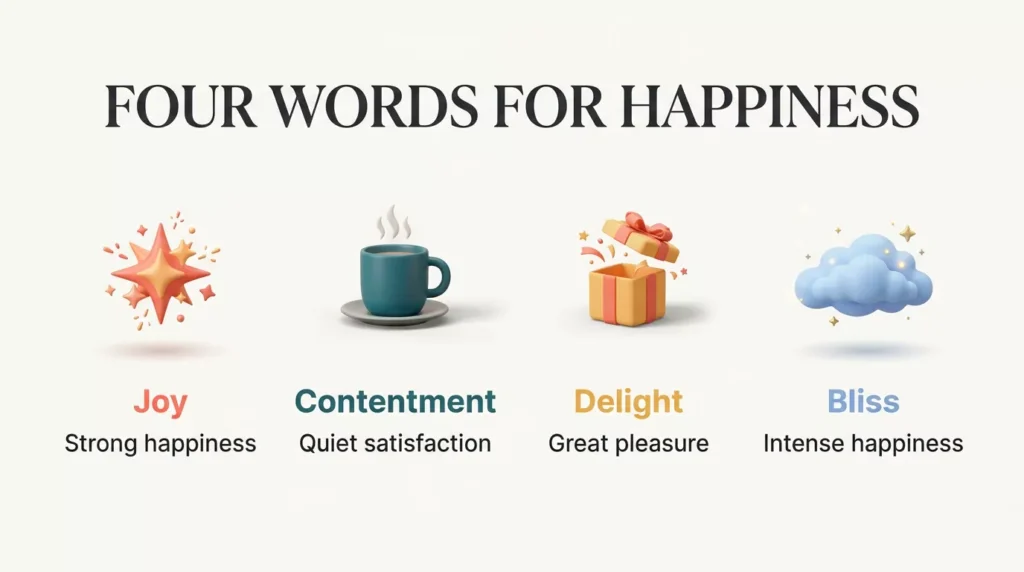
Several words seem similar but communicate different shades of meaning. Understanding these differences helps you avoid awkward substitutions.
| Word | Main meaning | Typical tone | Best context |
| Happiness | General positive emotional state | Neutral | Everyday and general writing |
| Joy | Strong positive feeling | Warm and expressive | Meaningful or happy experiences |
| Contentment | Satisfaction with circumstances | Calm | Everyday life and reflection |
| Delight | Strong pleasure | Expressive | Pleasant surprises and enjoyable events |
| Bliss | Intense happiness | Emotional or literary | Exceptional happy moments |
| Pleasure | Enjoyment or satisfaction | Neutral | Activities and experiences |
| Elation | Intense happiness after success | Energetic | Achievements and victories |
| Serenity | Calm and peacefulness | Gentle | Nature, reflection, and relaxation |
| Euphoria | Exceptionally intense happiness | Strong | Powerful emotional experiences |
| Fulfillment | Satisfaction from meaning or achievement | Reflective | Work, relationships, and personal goals |
Joy vs. Happiness
Happiness is a broad term for positive feelings or life satisfaction. Joy often describes a more immediate or intense positive emotion.
For example, someone may feel generally happy with life. They may also experience joy when reuniting with a loved one.
Contentment vs. Happiness
Contentment emphasises satisfaction with what someone already has. Happiness can include satisfaction, excitement, pleasure, or other positive emotions.
For example, enjoying a quiet evening may create contentment. Receiving unexpected good news may bring excitement and happiness.
Delight vs. Bliss
Delight often follows something pleasing or enjoyable. Bliss suggests an especially intense or complete state of happiness.
For example, a thoughtful gift may bring delight. A deeply meaningful moment may feel like bliss.
Happiness vs. Euphoria
Happiness can be mild, moderate, or intense. Euphoria generally describes a much stronger feeling of excitement or happiness.
For example, a pleasant conversation may bring happiness. Winning an important competition may produce euphoria.
How to Choose the Right Happiness Synonym
Use these practical steps when replacing the word happiness in your writing.
- Identify the emotion. Decide whether you mean excitement, calm satisfaction, pleasure, or deep joy.
- Consider the intensity. Choose words such as delight for strong pleasure or contentment for quieter satisfaction.
- Match the context. Professional writing may suit satisfaction, while creative writing may suit rapture.
- Check the sentence structure. Some words work naturally as nouns, adjectives, or phrases. Others require a different grammatical form.
- Read the sentence aloud. Choose the alternative that sounds clear and natural.
- Avoid unnecessary repetition. Vary your vocabulary only when the new word preserves the intended meaning.
For example, “Her happiness was obvious” could become “Her delight was obvious.” However, “Her contentment was obvious” suggests a calmer emotional state.
Common Mistakes When Using Happiness Synonyms
Treating Every Synonym as Identical
Joy, contentment, pleasure, and euphoria overlap in meaning. However, they describe different experiences. Choose words based on the exact emotion.
Using Overly Formal Words in Casual Writing
Words such as beatitude and felicity may sound unnatural in everyday conversation. Simpler alternatives often communicate more clearly.
Confusing Happiness With Optimism
Happiness describes a positive emotional state. Optimism describes an expectation that future events may turn out well. Someone can be optimistic without feeling happy at that moment.
Confusing Happiness With Gratitude
Gratitude means appreciating something received or experienced. It may accompany happiness, but the two words do not mean the same thing.
Ignoring Grammar
The noun happiness does not always fit where an adjective is required. For example, “She was happy” is natural, while “She was happiness” is not.
Use the adjective happy when describing a person’s emotional state. Use happiness when naming the feeling itself.
Antonyms of Happiness
Antonyms help clarify the meaning of happiness by showing its opposite emotional states.
| Antonym | Meaning | Example |
| Sadness | A feeling of sorrow | She felt sadness after saying goodbye. |
| Unhappiness | A lack of happiness | The situation caused considerable unhappiness. |
| Misery | Extreme distress or unhappiness | He struggled with misery after the loss. |
| Sorrow | Deep sadness, often after a loss | The family shared their sorrow. |
| Gloom | A feeling or atmosphere of sadness | Gloom settled over the room. |
| Despair | A loss of hope | He faced despair during the difficult period. |
| Distress | Emotional suffering or upset | The news caused distress. |
| Discontent | Dissatisfaction with a situation | Growing discontent affected the team. |
| Dissatisfaction | A feeling that something is not good enough | She expressed dissatisfaction with the result. |
| Melancholy | A thoughtful or lingering sadness | The song left him with melancholy. |
Frequently Asked Questions
What Is the Best Synonym for Happiness?
Joy is a strong, widely useful synonym for happiness. However, the best choice depends on the context. Contentment suits calm satisfaction, while delight describes strong pleasure.
What Are Five Words for Happiness?
Five common words are joy, delight, contentment, bliss, and pleasure. Each describes a slightly different positive feeling.
What Is a More Formal Word for Happiness?
Satisfaction, fulfillment, gratification, and felicity can work in formal writing. Choose the word that matches the intended meaning and tone.
What Is a Word for Deep Happiness?
Bliss, rapture, and ecstasy can describe intense happiness. Elation is especially suitable after an achievement or success.
What Is a Word for Quiet Happiness?
Contentment, serenity, and tranquility describe calm or peaceful states. Contentment emphasises satisfaction, while serenity emphasises inner calm.
Are Joy and Happiness the Same?
Joy and happiness have related meanings, but their uses differ. Happiness is broader, while joy often describes a more immediate or intense positive emotion.
What Is the Difference Between Happiness and Contentment?
Happiness covers many positive emotions and experiences. Contentment specifically suggests satisfaction with one’s present circumstances.
What Is the Opposite of Happiness?
Sadness and unhappiness are common antonyms. Other alternatives include misery, sorrow, despair, and discontent, depending on the context.
How Can I Avoid Repeating the Word Happiness?
Use a more precise alternative when it reflects the intended meaning. Try joy, satisfaction, contentment, or delight where appropriate. Do not replace a word simply for variety if the meaning changes.
What Is a Good Synonym for Happiness in an Essay?
Joy, contentment, satisfaction, and fulfillment can work well in essays. For formal academic writing, choose the word that best fits the evidence and argument.
Conclusion
Happiness synonyms help you express positive emotions with greater precision. Joy, delight, bliss, contentment, and satisfaction each communicate a different feeling.
Some words describe excitement, while others suggest calmness or lasting fulfillment. Consider the situation, emotional intensity, and tone before choosing an alternative.
For everyday writing, simple words often work best. For essays and creative writing, more specific vocabulary can add depth. The goal is not to replace happiness everywhere, but to select the word that expresses your meaning most clearly.

Nadeem Akhtar has a keen interest in the way words shape clear communication. Through SimpleSynonyms, he shares easy-to-understand resources on vocabulary, synonyms, meanings, and everyday English to help readers express themselves with greater confidence.