
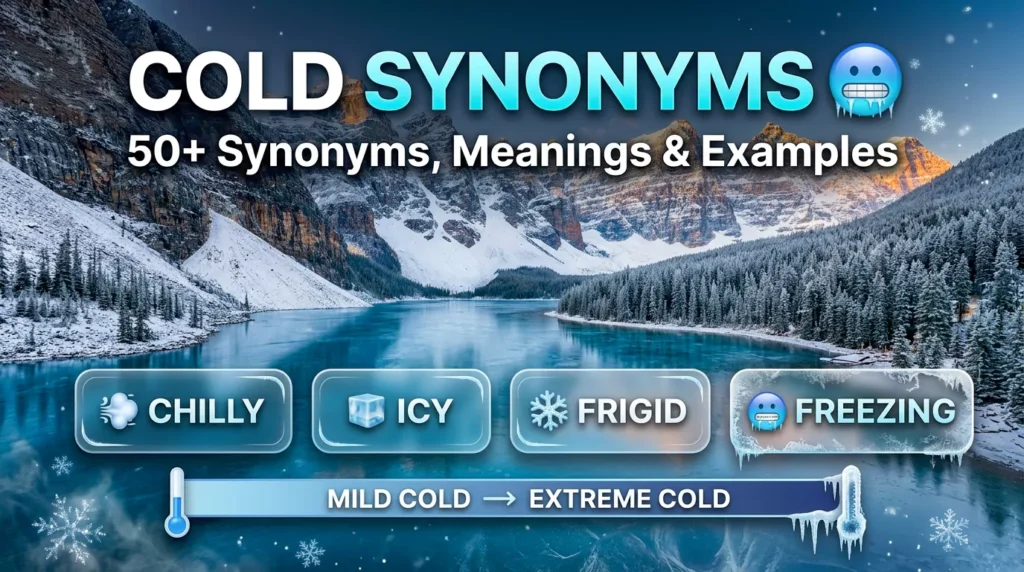

Looking for synonyms for cold? The best alternative depends on what you mean. Words like chilly, freezing, and frigid describe low temperatures. Words like aloof, distant, and unfriendly describe a person’s behavior. Other alternatives describe cold weather, emotions, or physical sensations.
This guide explores more than 50 cold synonyms, with simple definitions and practical examples. You will also learn how to choose the right word for different situations.
🌡️ What Does Cold Mean?
The word cold commonly describes a low temperature or a lack of warmth. It can also describe someone who seems emotionally distant or unfriendly. In other contexts, it refers to a respiratory illness or a lack of enthusiasm.
For example, cold water has a low temperature. A cold response may seem unfriendly. A cold winter morning describes chilly weather.
Understanding the context helps you select the most accurate synonym.
📋 Quick List of Cold Synonyms
Here are some common alternatives to the word cold.
| Synonym | Meaning |
| 🌬️ Chilly | Uncomfortably cool |
| 🌡️ Cool | Slightly cold |
| ❄️ Freezing | Extremely cold |
| 🧊 Frigid | Intensely cold |
| 🥶 Icy | Very cold or covered with ice |
| 🌨️ Frosty | Very cold or covered with frost |
| 🧣 Wintry | Characteristic of winter |
| 🧍 Aloof | Emotionally or socially distant |
| 💬 Distant | Not warm or friendly |
| 🧊 Detached | Emotionally uninvolved |
| 😐 Unfriendly | Not welcoming or pleasant |
| 💔 Unfeeling | Showing little emotion or sympathy |
| 🧠 Impersonal | Lacking personal warmth |
| 🥀 Heartless | Lacking compassion |
| 😶 Indifferent | Showing little interest or concern |
Remember that these words have different meanings. Choose the one that matches your intended message.
🧊 Synonyms for Cold Temperature
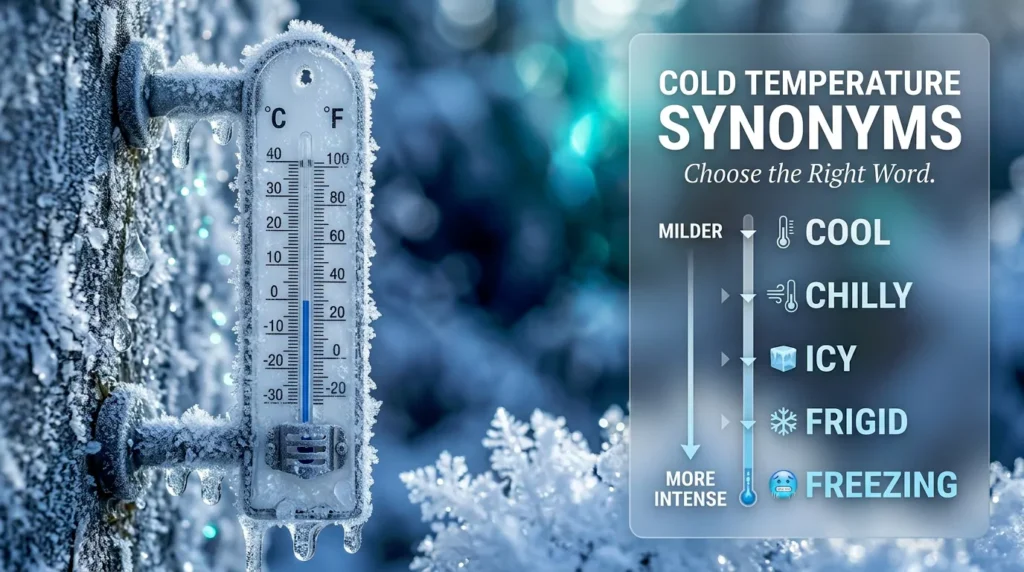
When describing temperature, choose a synonym based on how cold something feels. Some words suggest mild coolness, while others describe extreme cold.
- 🌡️ Cool: Slightly cold, often comfortable.
Example: The evening air felt cool after sunset. - 🌬️ Chilly: Uncomfortably cool.
Example: A chilly breeze swept through the open window. - 🥶 Freezing: Extremely cold or cold enough to freeze.
Example: My hands became numb in the freezing weather. - 🧊 Frigid: Intensely cold, often describing air or water.
Example: The hikers crossed a frigid mountain stream. - ❄️ Icy: Extremely cold or covered with ice.
Example: The icy water made everyone gasp. - 🌨️ Frosty: Very cold or covered with frost.
Example: Frosty grass sparkled in the morning sunlight. - 🥶 Bitterly cold: Unpleasantly cold, often because of wind or severe weather.
Example: It was bitterly cold outside the shelter. - 🧊 Numbing: So cold that sensation becomes reduced.
Example: The numbing wind made it difficult to hold the railing. - 🌬️ Brisk: Cool and invigorating, especially when describing air or weather.
Example: We enjoyed a brisk walk before breakfast. - ❄️ Glacial: Extremely cold or associated with glaciers. It can also mean very slow.
Example: Glacial winds swept across the frozen landscape.
✍️ Which Temperature Synonym Should You Use?
Use cool for mild temperatures and chilly for uncomfortable coolness. Choose freezing or frigid for much more intense cold. Use numbing when cold reduces physical sensation.
For a descriptive sentence, consider the degree of coldness and its effect. The right word helps readers imagine the conditions more clearly.
❄️ Synonyms for Cold Weather
Cold weather can feel mild, harsh, damp, windy, or freezing. These alternatives help describe different winter conditions.
- 🌨️ Wintry: Typical of winter weather.
Example: A wintry wind swept across the empty field. - ❄️ Frosty: Marked by frost or very cold conditions.
Example: We walked across the frosty lawn. - 🌬️ Biting: Describes cold that feels sharp against the skin.
Example: A biting wind made the walk uncomfortable. - 🥶 Bitter: Intensely cold and unpleasant.
Example: Bitter winds swept through the village. - 🧊 Icy: Very cold or involving ice.
Example: Icy roads made the morning commute dangerous. - 🌨️ Snowy: Characterized by falling or settled snow.
Example: The snowy afternoon kept children indoors. - 🌬️ Brisk: Cool, fresh, and sometimes invigorating.
Example: The brisk morning air felt refreshing. - 🧣 Nippy: Informally describes slightly uncomfortable cold.
Example: It was a little nippy outside, so I grabbed a jacket. - 🥶 Raw: Cold and damp in an unpleasant way.
Example: The raw weather made the coastal walk miserable. - ❄️ Subzero: Below zero on a temperature scale, usually Celsius or Fahrenheit.
Example: The team prepared for subzero temperatures overnight.
🌬️ Examples of Cold Weather Synonyms
Instead of writing, “It was very cold outside,” you can be more specific:
- “A biting wind swept through the streets.”
- “The morning air was crisp and chilly.”
- “We stayed inside during the bitter winter storm.”
- “Subzero temperatures covered the region overnight.”
- “The raw, damp weather made everyone uncomfortable.”
Each description communicates a slightly different experience.
🥶 Synonyms for a Cold Person or Personality
When cold describes a person, it often refers to someone who seems distant, reserved, or difficult to approach. The best synonym depends on whether you mean quiet behavior, emotional distance, or unfriendliness.
- 🧍 Aloof: Emotionally or socially distant.
Example: He seemed aloof during the meeting. - 😐 Unfriendly: Not kind, welcoming, or pleasant.
Example: The receptionist sounded unfriendly on the phone. - 🧊 Distant: Not emotionally close or approachable.
Example: She became distant after their disagreement. - 🧠 Detached: Not emotionally involved in a situation.
Example: The counselor remained detached while reviewing the case. - 🤐 Reserved: Quiet and reluctant to share personal feelings.
Example: He was reserved around people he had just met. - 🧍 Stand-offish: Appearing unwilling to interact socially.
Example: Her stand-offish manner made introductions awkward. - 😶 Unapproachable: Difficult to speak to or approach.
Example: The manager looked unapproachable during the busy afternoon. - 🧊 Standoffish: Distant or unfriendly in social situations.
Example: His standoffish attitude discouraged casual conversation. - 💔 Heartless: Showing little concern for other people’s suffering.
Example: His heartless remark upset the entire team. - 🥀 Insensitive: Not considering other people’s feelings.
Example: That insensitive comment hurt her deeply.
💬 How to Describe a Cold Personality Accurately
Not every quiet person is cold or unfriendly. Someone who is reserved may simply need time to feel comfortable. An aloof person seems distant, while an insensitive person may overlook others’ feelings.
Use heartless only when you intend a strong criticism. For neutral descriptions, reserved or distant may be more appropriate.
💔 Synonyms for Cold Emotions or Behavior
Sometimes, cold describes an action or response rather than someone’s entire personality. These alternatives help express a lack of warmth, sympathy, or enthusiasm.
- 😶 Indifferent: Showing little interest or concern.
Example: He seemed indifferent to the team’s concerns. - 💔 Unfeeling: Showing little emotion or sympathy.
Example: Her unfeeling response surprised everyone. - 🥀 Callous: Showing little concern for other people’s feelings.
Example: The callous remark caused unnecessary pain. - 🧊 Impersonal: Lacking individual attention or emotional warmth.
Example: The company sent an impersonal rejection letter. - 😐 Matter-of-fact: Direct and practical, without obvious emotion.
Example: She gave a matter-of-fact explanation of the problem. - 🧠 Clinical: Detached, analytical, or lacking emotional warmth.
Example: His clinical assessment focused entirely on the facts. - 🥶 Hostile: Unfriendly or openly antagonistic.
Example: The conversation turned hostile after the accusation. - 💬 Curt: Brief and sometimes rude in speech.
Example: He gave a curt reply and left the room. - 🧊 Unresponsive: Showing little or no reaction.
Example: She remained unresponsive to repeated requests. - 🥀 Unsympathetic: Not showing understanding or compassion.
Example: The official seemed unsympathetic to their difficulties.
🔍 Choosing the Right Emotional Synonym
Use indifferent when someone shows little interest. Choose callous when they disregard other people’s feelings. Use curt for a brief, abrupt reply.
A matter-of-fact response is not necessarily cruel or unfriendly. It simply focuses on information rather than emotion.
🤒 Synonyms and Expressions Related to a Common Cold
The word cold also names a common respiratory illness. In this context, temperature synonyms such as chilly and frigid are not suitable replacements.
Useful related terms include:
- 🤧 Common cold: A common viral infection affecting the upper respiratory tract.
- 🤒 Head cold: An informal term for a cold with prominent nasal symptoms.
- 😷 Respiratory infection: A broader category of illnesses affecting the respiratory system.
- 🤧 Upper respiratory infection: An infection involving areas such as the nose and throat.
These terms are related, but they are not exact synonyms. A respiratory infection can have different causes, and not every respiratory illness is a common cold.
Example: “I stayed home because I had a common cold.”
You could also write, “I stayed home because I had an upper respiratory infection,” if that description is accurate.
🎨 Figurative Meanings of Cold
The word cold can describe more than temperature or personality. It also appears in expressions about facts, colors, reactions, and social situations.
- 🧠 Objective: Based on facts rather than personal feelings.
Example: The investigator presented an objective account of the incident. - 📊 Factual: Based on information that can be verified.
Example: The report offered a factual explanation of the events. - 🧊 Sterile: Lacking warmth, personality, or a welcoming atmosphere.
Example: The sterile room felt uncomfortable and impersonal. - 💬 Unwelcoming: Not inviting or friendly.
Example: The cold reception made the visitors feel unwelcome. - 🎨 Cool-toned: Having colors associated with cool shades, such as blue or blue-green.
Example: Cool-toned walls gave the room a calm appearance. - 🧊 Emotionless: Showing little visible emotion.
Example: He delivered the speech in an emotionless voice. - 📉 Unenthusiastic: Showing little excitement or interest.
Example: The audience gave an unenthusiastic response. - 🧾 Matter-of-fact: Presented without much emotion or exaggeration.
Example: She described the difficult situation in a matter-of-fact tone.
💡 Common Expressions Using Cold
Some expressions have established meanings that cannot be replaced with any cold synonym.
- Cold shoulder: Deliberately ignoring or showing unfriendliness toward someone.
- Cold feet: Nervousness or hesitation before doing something important.
- Cold hard facts: Facts presented plainly, without comforting interpretations.
- Cold-blooded: Often describing a ruthless action or, literally, certain animals whose body temperature depends on their environment.
- Cold call: An unsolicited sales or business contact.
- Cold case: An investigation that has remained unresolved or inactive.
These expressions should generally remain intact. Replacing cold with chilly or freezing would change their meaning.
🔍 Cold vs. Cool vs. Chilly vs. Freezing
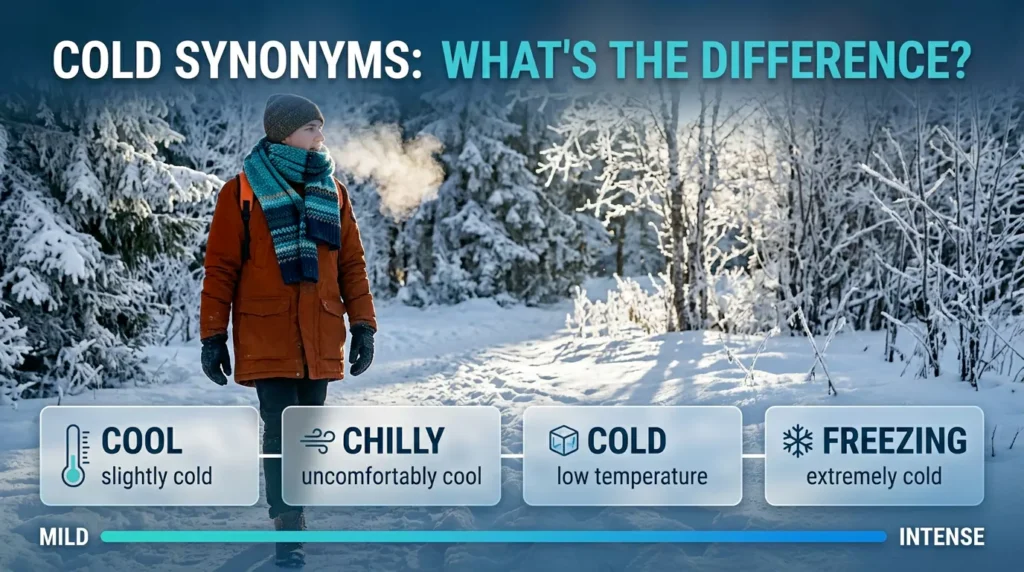
These four words describe different degrees or experiences of low temperature.
| Word | Main meaning | Example |
| 🌡️ Cool | Slightly cold, sometimes pleasant | The room feels cool. |
| 🌬️ Chilly | Uncomfortably cool | The chilly wind stung my face. |
| 🥶 Cold | A general term for low temperature | The water is cold. |
| ❄️ Freezing | Extremely cold or at the freezing point | My fingers are freezing. |
Cold vs. cool: Cool usually suggests milder coldness. It can also describe something fashionable or impressive.
Cold vs. chilly: Chilly often emphasizes discomfort from cool air or weather.
Cold vs. freezing: Freezing is stronger and can refer to temperatures at or below a substance’s freezing point. In casual speech, it often means extremely cold.
Cold vs. frigid: Frigid is a more emphatic term, often used in formal or descriptive writing.
✍️ Examples of Cold Synonyms in Sentences
Use these examples to see how different alternatives change a sentence’s meaning.
| Original sentence | Alternative sentence |
| The water was cold. | The water was icy. |
| It was cold outside. | A biting wind swept through the streets. |
| He was cold toward me. | He was distant toward me. |
| Her response was cold. | Her response was curt. |
| The room felt cold. | The room felt chilly. |
| His attitude was cold. | His attitude was callous. |
| The office looked cold. | The office looked sterile. |
| She gave me a cold look. | She gave me an icy stare. |
| The weather was cold and damp. | The weather was raw and damp. |
| He sounded cold during the interview. | He sounded detached during the interview. |
Notice that the alternatives sometimes change the sentence’s emphasis. Curt describes brief speech, while callous describes a lack of concern for others.
⚡ Antonyms of Cold
The opposite of cold depends on its meaning. When discussing temperature, the opposite is usually hot or warm. When describing a person’s behavior, the opposite may be warm, friendly, or compassionate.
- 🔥 Hot: Having a high temperature.
- ☀️ Warm: Comfortably warm or emotionally friendly.
- 😊 Friendly: Kind and welcoming toward others.
- ❤️ Affectionate: Showing fondness or love.
- 🤝 Compassionate: Showing concern for others’ suffering.
- 🌼 Welcoming: Making people feel accepted and comfortable.
- 💛 Caring: Showing concern and kindness.
Examples:
- Cold water → warm water.
- A cold personality → a friendly personality.
- A cold response → a compassionate response.
- A cold welcome → a warm welcome.
The correct antonym depends on the sentence, not simply the word itself.
Frequently Asked Questions
What is the most common synonym for cold?
Chilly is a common alternative when describing uncomfortable low temperatures. Cool works for milder temperatures, while freezing describes extreme cold. The best choice depends on the intensity you want to express.
What is another word for extremely cold?
Freezing, frigid, icy, and bitterly cold can describe intense cold. Subzero specifically means below zero on a stated temperature scale.
What is a synonym for a cold person?
Aloof, distant, detached, and unfriendly can describe someone who seems emotionally distant. Use reserved when someone is simply quiet or reluctant to share feelings.
What is a synonym for cold-hearted?
Heartless, callous, unfeeling, and unsympathetic are possible alternatives. Each suggests a lack of kindness or concern, but their intensity differs.
What is a positive synonym for cold?
Cool can sound positive when describing comfortable temperatures or a stylish person. Brisk can describe refreshing weather. Most personality-related synonyms for emotional coldness carry negative meanings.
What is a more formal word for cold?
Frigid is a more formal or emphatic alternative for low temperatures. Detached and impersonal may suit formal writing about emotional distance.
What is the difference between cold and aloof?
Cold can describe temperature, emotion, or behavior. Aloof specifically describes someone who seems socially or emotionally distant.
What is the opposite of cold?
For temperature, the opposite is usually hot or warm. For personality, suitable opposites include friendly, affectionate, and compassionate.
Conclusion
Cold has many synonyms, but the best word depends on context. Choose cool or chilly for mild coldness, and freezing or frigid for extreme temperatures. Use aloof or distant to describe emotional separation. Words like callous and heartless express a stronger lack of compassion. For weather, biting, frosty, and wintry add descriptive detail. Always consider the meaning, tone, and situation before choosing an alternative. The right synonym makes your writing more precise, natural, and expressive.

Nadeem Akhtar has a keen interest in the way words shape clear communication. Through SimpleSynonyms, he shares easy-to-understand resources on vocabulary, synonyms, meanings, and everyday English to help readers express themselves with greater confidence.